In this article
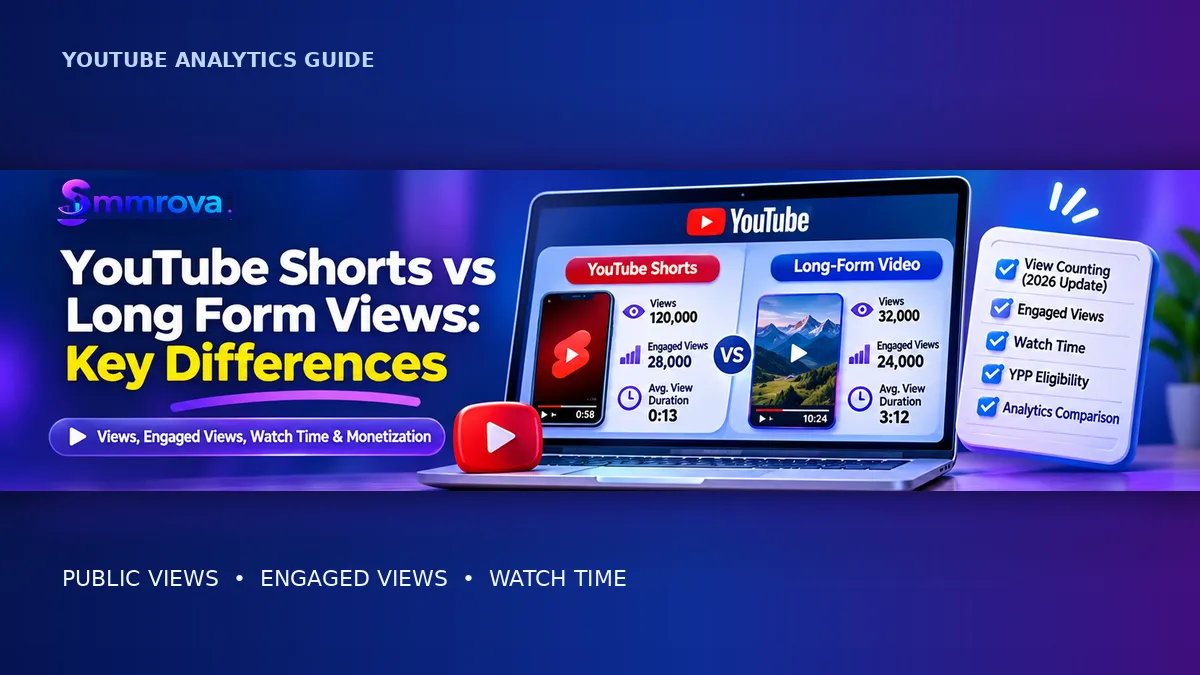
YouTube Shorts vs long form views are easier to understand when you know how YouTube counts a view, what an engaged view means, and how watch time differs between the two formats. Although Shorts and traditional videos now share the same basic public view-counting rule, their viewing experiences and performance metrics are not identical.
Since August 24, 2026, YouTube has counted public views across Shorts and long-form videos from the moment playback starts. However, engaged views, average view duration, audience retention, and watch time still provide important information about how people interact with each format.
In this guide, we will compare both formats, explain the current view-counting system, and show you how to evaluate their performance using YouTube Studio Analytics.
What Changed in YouTube Shorts vs Long Form Views?
One important update changed how creators should understand YouTube views. Previously, YouTube used different public view-counting approaches across video formats. The platform has now aligned these metrics.
According to YouTube's official announcement, beginning August 24, 2026, a public view is counted when a video starts playing, across Shorts, long-form videos, podcasts, and live streams.
This means that the basic public view-counting rule is now the same for both Shorts and long-form content.
- YouTube Shorts: A view is counted when the Short starts playing in the Shorts Feed.
- Long-form videos: A view is counted when playback begins, including when a video starts playing in supported browsing or viewing experiences.
However, a public view does not necessarily mean someone watched the entire video or paid attention to it for a long time.
You can read the latest definitions directly in YouTube's official guide to how engagement metrics are counted.
What Is the Difference Between Views and Engaged Views?
Understanding the difference between public views and engaged views is essential when evaluating YouTube performance.
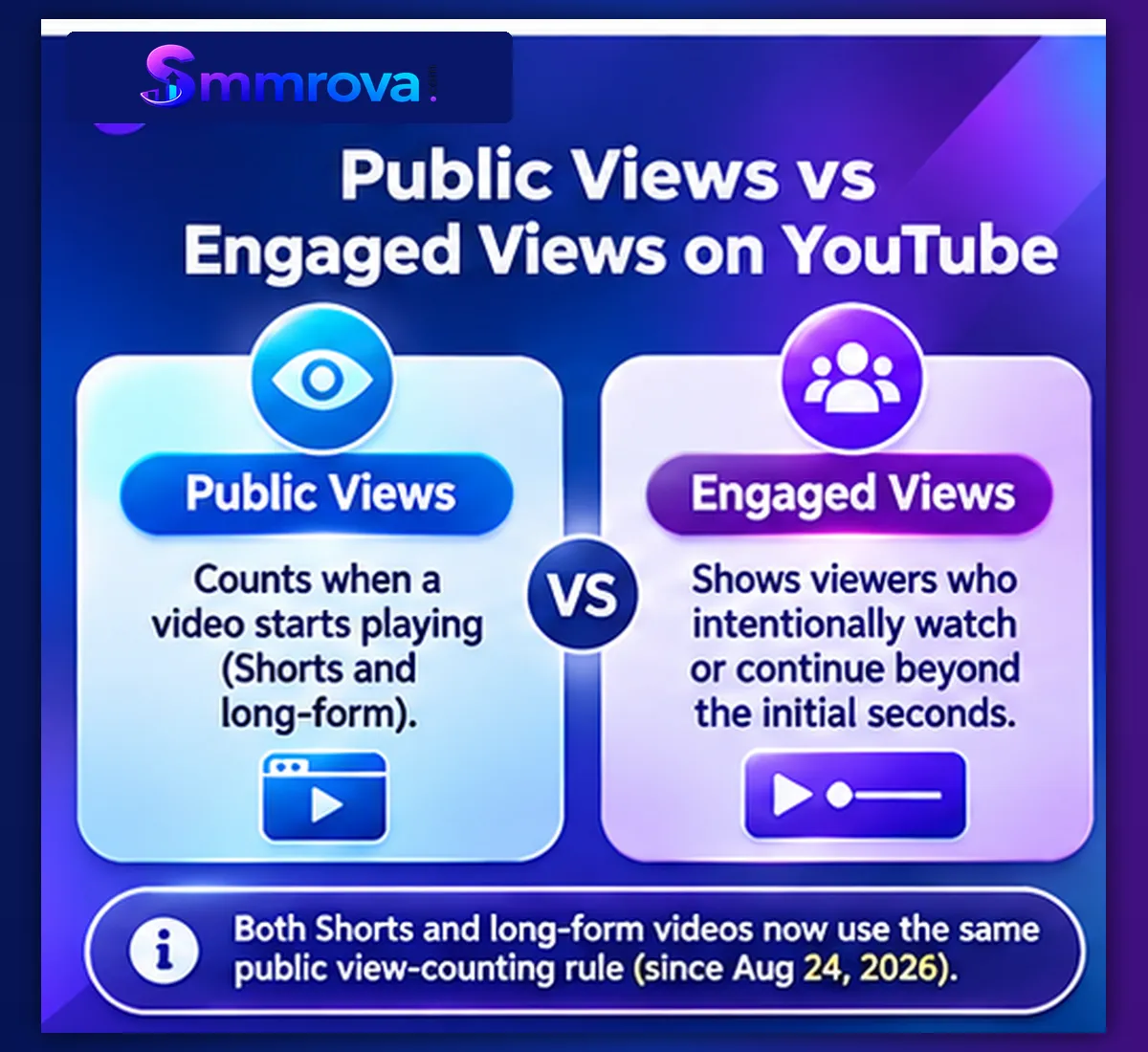
Public Views
Public views represent the number of times playback starts. This metric helps creators understand how often their videos begin playing across YouTube.
For example, a Short can receive a public view as soon as it starts playing in the Shorts Feed. A long-form video can also receive a public view when playback begins.
Engaged Views
Engaged views provide a more meaningful indication of viewers choosing to continue watching. YouTube describes an engaged view as a click to watch or a viewer staying beyond the initial seconds of playback.
This distinction is important because a video can collect public views without attracting the same level of continued attention.
YouTube retains engaged views in Analytics so creators can understand how viewers respond beyond the initial playback.
| Metric | What It Tells You |
|---|---|
| Public Views | How many times playback started. |
| Engaged Views | How many views involved continued viewer interest or an intentional watch. |
| Average View Duration | How long viewers watched on average. |
| Watch Time | The total amount of time viewers spent watching. |
| Audience Retention | How well the video holds viewers' attention over its duration. |
For a more detailed explanation, see YouTube's explanation of engaged views.
YouTube Shorts vs Long Form Views: Key Differences
Although the public view-counting rule is now aligned, the two formats are designed for different viewing experiences. This affects how creators should interpret their results.
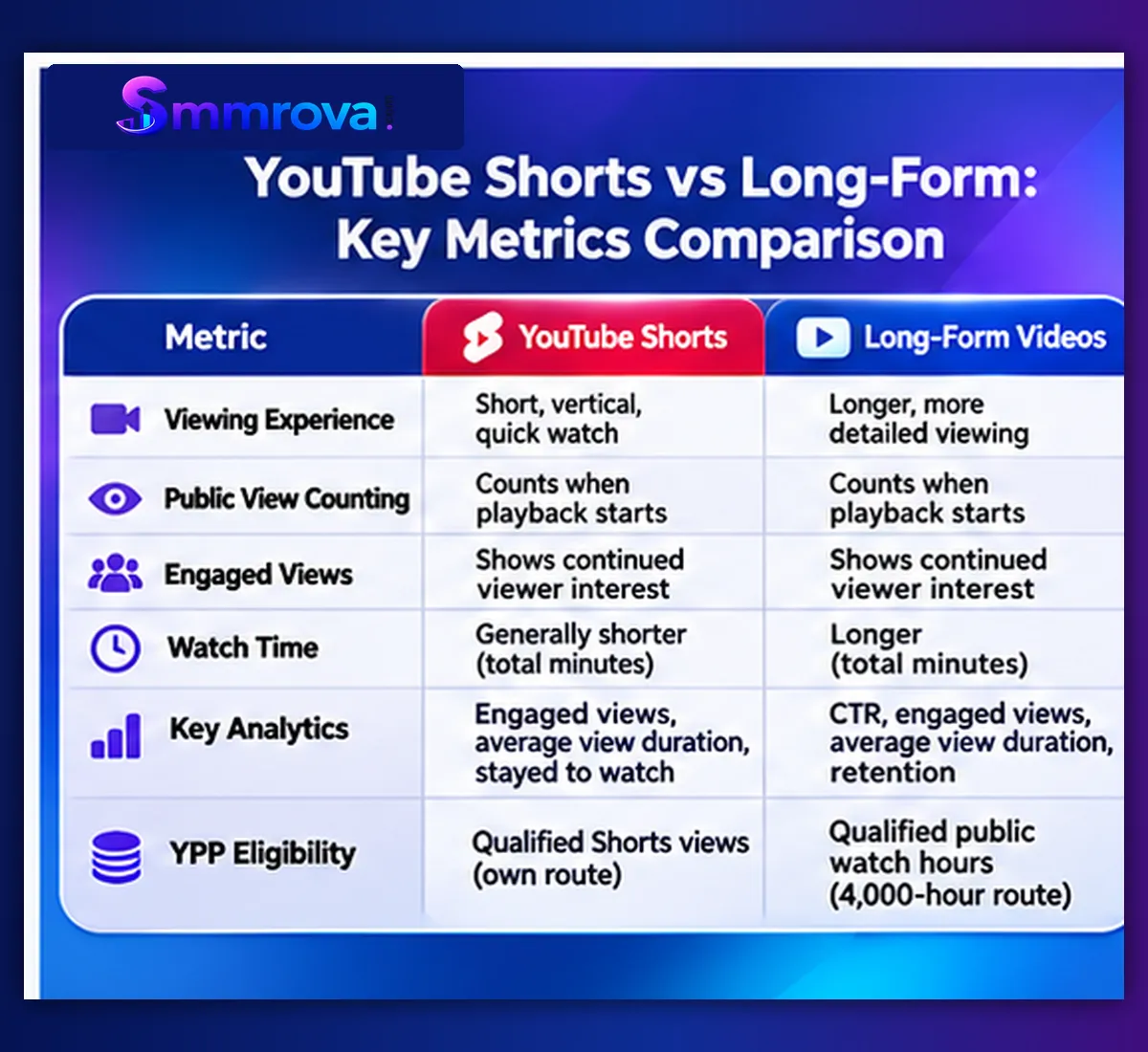
| Comparison | YouTube Shorts | Long-Form Videos |
|---|---|---|
| Typical experience | Short-form vertical viewing in the Shorts Feed. | Longer viewing sessions on video watch pages and other discovery surfaces. |
| Public view counting | Playback starting counts as a view. | Playback starting counts as a view. |
| Engaged views | Shows viewers who choose to continue watching or intentionally watch. | Shows viewers who choose to watch beyond the initial playback. |
| Useful performance signals | Engaged views, stayed to watch, average view duration and interactions. | Engaged views, thumbnail impressions, CTR, average view duration and audience retention. |
| Content approach | Quick explanations, highlights and short demonstrations. | Detailed tutorials, reviews, discussions and complete guides. |
| Watch-hour eligibility | Shorts Feed watch hours do not count toward the 4,000 qualified public watch-hours route. | Qualified watch hours from eligible public long-form content can count toward that route. |
The biggest lesson is that equal public view counts do not necessarily represent equal audience engagement, viewing time, or channel value.
YouTube also recommends comparing content of the same type because audience behaviour differs between Shorts and videos. A format that performs well for one channel objective may not produce the same result for another.
How the Two Formats Affect Watch Time and Monetization
Public views and watch time are different measurements. A video may receive many views but still generate relatively little total viewing time.
Consider a simple hypothetical example:
| Example | Public Views | Engaged Views | Average View Duration |
|---|---|---|---|
| Short A | 30,000 | 6,000 | 13 seconds |
| Long Video B | 8,000 | 5,000 | 3 minutes |
In this hypothetical example, Short A has more public views. However, Long Video B generates substantially more viewing time because its engaged viewers watch for longer.
These numbers are illustrative only, not industry benchmarks or expected results. Actual performance depends on the content, audience and viewing behaviour.
Do YouTube Shorts Views Count Toward the 4,000 Watch Hours?
No. Watch hours generated from views in the Shorts Feed do not count toward the 4,000 qualified public watch-hours threshold for that YouTube Partner Program eligibility route.
YouTube provides separate eligibility routes for long-form watch hours and qualified Shorts views. The requirements are not interchangeable.
For the long-form route, watch hours must come from eligible public content. Private, unlisted and deleted videos, ad campaigns, and Shorts Feed watch hours are among the sources that do not count toward the qualified watch-hours threshold.
Qualified Shorts views have their own requirements. They must come from eligible public Shorts appearing in the Shorts Feed. Not every public view automatically becomes a qualified Shorts view.
You can review the current requirements in YouTube's official Partner Program eligibility guide.
How to Compare Shorts and Long-Form Performance in YouTube Studio
YouTube Studio provides analytics reports that help creators compare different content formats. Instead of relying only on public view counts, examine the metrics that match your goals.
Follow these steps:
- Open YouTube Studio: Sign in to the account that manages your channel.
- Open Analytics: Select Analytics from the left navigation menu.
- Select the Content tab: Review available reports for videos, Shorts and other content types.
- Filter by format: Use the Videos and Shorts filters to review each format separately.
- Compare public views: Review how frequently your videos begin playing.
- Review engaged views: Check how many viewers continue watching.
- Examine viewing time: Compare average view duration and total watch time.
- Review audience behaviour: Look at available retention, traffic-source and viewer-overlap information.
For example, if Shorts consistently attract viewers but your longer tutorials receive very little attention, consider whether the long-form topics, titles, thumbnails or opening sections need improvement.
You can also use the Viewers Across Formats report to understand whether your Shorts audience overlaps with your long-form audience.
See YouTube's official Content tab analytics guide for more information about comparing formats.
When Should You Use YouTube Shorts or Long-Form Videos?
Neither format is automatically better. Your choice should depend on the content you produce and the outcome you want from your channel.
Choose YouTube Shorts When:
- You want to share quick tips or short explanations.
- You want to demonstrate a product or feature briefly.
- You have an engaging moment that works well in a short video.
- You want to experiment with different topics and presentation styles.
- You want to introduce new viewers to your channel.
Choose Long-Form Videos When:
- You need to explain a topic in detail.
- You want to publish complete tutorials or educational content.
- Your audience needs step-by-step instructions.
- You need room for demonstrations, reviews or detailed discussions.
- You are building a strategy around eligible public watch hours.
Can You Use Both Formats Together?
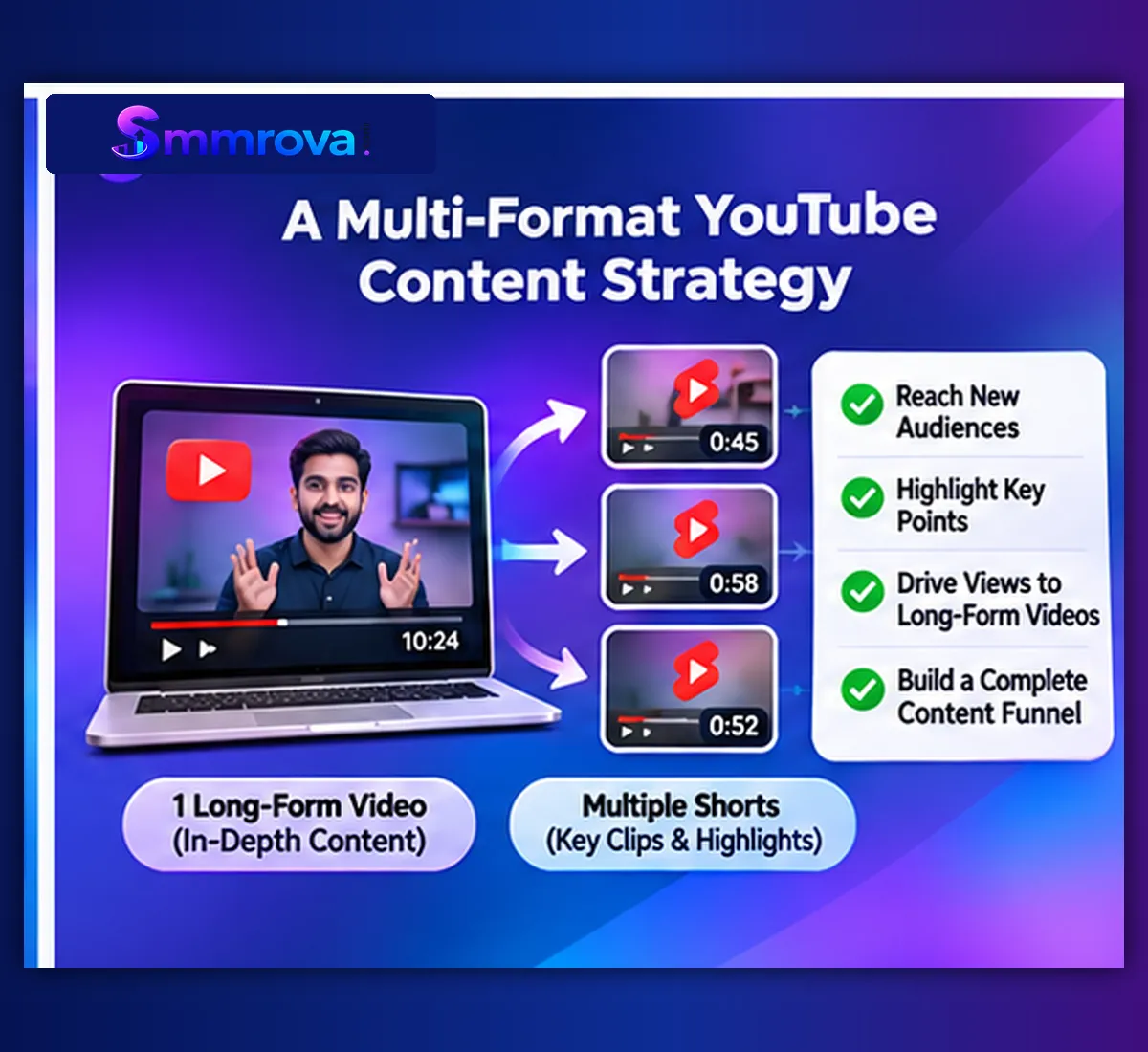
Yes. A multi-format content strategy can help creators serve different viewer needs.
For example, a technology channel could publish a detailed smartphone review as a long-form video and create several Shorts highlighting specific features, demonstrations or useful tips.
The Shorts can introduce viewers to individual ideas, while the longer video provides the complete explanation. Use YouTube Analytics to understand whether viewers actually move between the formats rather than assuming that every Shorts viewer will watch your long-form videos.
Common Mistakes When Comparing YouTube Views
Creators sometimes misunderstand their performance because they focus on one number instead of reviewing the complete analytics picture.
- Comparing only public views: A higher view count does not automatically mean stronger audience engagement.
- Ignoring engaged views: This can hide the difference between a video that starts playing and one that holds attention.
- Confusing views with watch time: A view does not represent a fixed amount of viewing time.
- Assuming Shorts watch hours count toward the long-form threshold: Shorts Feed watch hours do not contribute to the 4,000 qualified public watch-hours route.
- Comparing unrelated content: A short entertainment clip and a detailed educational tutorial have different purposes and viewing patterns.
- Relying on artificial engagement: YouTube prohibits artificial increases in views and other metrics. These activities do not guarantee legitimate audience engagement or monetization eligibility.
Always use genuine audience behaviour and official analytics when evaluating your channel.
Frequently Asked Questions
Are YouTube Shorts and Long-Form Views Counted the Same Way?
Yes. Since August 24, 2026, public views across Shorts and long-form videos are counted when playback starts. However, engaged views and other performance metrics provide additional information about viewer behaviour.
What Is the Difference Between Shorts Views and Engaged Views?
A public view counts when playback begins. An engaged view indicates that someone intentionally watches or continues beyond the initial seconds. They measure different aspects of video performance.
Can YouTube Shorts Generate Watch Time?
Yes. Shorts can generate actual watch time, but watch hours from the Shorts Feed do not count toward the 4,000 qualified public watch-hours route for YPP eligibility.
Which Is Better for Growing a YouTube Channel: Shorts or Long-Form Videos?
Neither is universally better. Shorts can help introduce content to new viewers, while long-form videos allow creators to develop detailed topics. The best choice depends on your audience and channel goals.
Do More YouTube Views Guarantee Monetization?
No. Public views alone do not guarantee monetization. YouTube uses qualified views, qualified watch hours, subscriber requirements and channel policy reviews when evaluating eligibility.
Where Can I Compare Shorts and Long-Form Analytics?
Open YouTube Studio, select Analytics, and review the Content tab. Use the available Videos and Shorts filters to compare performance by format.
Final Thoughts
Understanding YouTube Shorts vs long form views requires looking beyond the public view counter. Although both formats now share the same basic public view-counting rule, they offer different viewing experiences and should be evaluated using relevant engagement and watch-time metrics.
Focus on engaged views, average view duration, audience retention and total watch time to understand what is happening beyond the initial playback.
Most importantly, choose your video format according to your content goals. Shorts and long-form videos can complement one another when they provide genuine value to the same audience.
If you are exploring YouTube promotion options, you can review the information on Smmrova's YouTube Views service page. Always review the platform's official Fake Engagement Policy before using third-party promotion. No external service can guarantee genuine engagement, qualified views or monetization eligibility.
Last reviewed: November 4, 2026. YouTube metrics and eligibility rules may change; always check the latest official documentation.
 Up nextYouTube Valid Public Watch Hours: What Counts?YouTube · 11 min read
Popular YouTube services
Ready to grow your social media?
Create a free SmmRova account and pay with bKash, Nagad or Rocket. We never ask for your password.
Create Free Account View ServicesQuestions before you order? Message us on WhatsApp