In this article
Facebook reach vs impressions is a common source of confusion for business owners, content creators, and social media marketers. Both metrics help explain how content is distributed, but they measure different things. Facebook also uses a Views metric in parts of its reporting, making the comparison more important than ever.
Understanding these numbers can help you evaluate whether your content is reaching new people, receiving repeat exposure, or attracting meaningful attention.
In this guide, we explain Facebook reach, impressions, and views using simple definitions, practical examples, and tips for reading Facebook Insights.
Facebook Reach vs Impressions: Quick Comparison
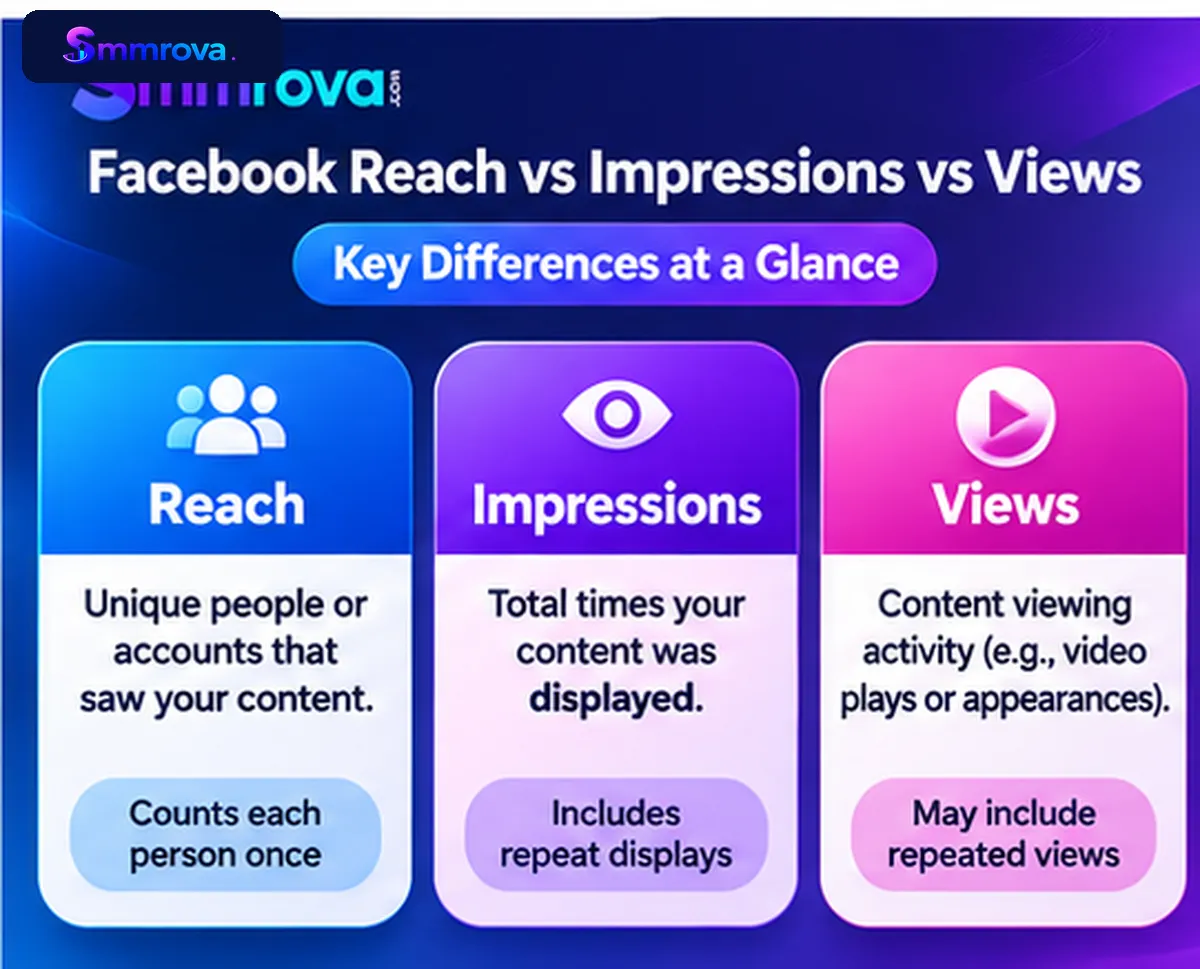
The main difference is simple: reach focuses on the people who saw content, while impressions traditionally measure how many times content was displayed.
| Metric | What It Measures | Can Repeat Exposure Count? | Main Purpose |
|---|---|---|---|
| Reach | Unique people or accounts reached, according to the report's definition | Generally no, within the selected reporting scope | Understand audience size |
| Impressions | Total times content or ads were displayed under the applicable reporting rules | Yes | Understand exposure frequency |
| Views | Content viewing activity under Meta's current metric definitions | May include repeated viewing activity | Understand content consumption and distribution |
Important: Views should not automatically be treated as an exact replacement for historical impressions. The definitions and available metrics depend on the content format, reporting tool, and whether you are reviewing organic or paid activity.
What Is Facebook Reach?
Facebook reach represents the number of unique people or accounts that saw your content within the relevant reporting period and measurement scope.
For example, if your Facebook post reaches 800 people, its reach is 800 even if some of those people encounter the post more than once.
Why Facebook Reach Matters
Reach is especially useful when your objective is to introduce your brand, products, or services to a wider audience.
- It helps estimate how many different people encountered your content.
- It can reveal whether your content is reaching beyond your existing audience.
- It helps you compare distribution across posts and campaigns.
- It provides context for evaluating engagement and other outcomes.
However, reaching someone does not mean that person read your entire post, remembered your brand, or took action.
What Are Facebook Impressions?
Facebook impressions traditionally describe how many times content was displayed, including repeated appearances to the same person.
Suppose one person sees your post three times and another person sees it twice. Under a traditional impression-counting model, those appearances could contribute five impressions while representing only two people reached.
This distinction helps explain why impression counts can exceed reach.
Why Impressions Matter
Impressions can help marketers understand repeated exposure. They are particularly relevant in advertising reports, where impressions remain an important metric.
Repeated exposure may improve familiarity, but more impressions do not automatically mean better performance. Showing the same message too frequently can also create fatigue.
Facebook Reach vs Views: What Changed?
If you are exploring Facebook analytics, you may notice that some dashboards emphasize Views rather than the older impressions terminology.
Meta has introduced Views as an important reporting metric across content experiences. Depending on the format and reporting surface, Views can reflect how often content is viewed or played, including repeat activity.
However, there are important differences:
- Reach focuses on the size of the audience exposed to content.
- Views focuses on viewing activity according to the metric's current definition.
- Impressions remains relevant in advertising and some other reporting contexts.
A Facebook video view, a content View, and an ad impression should not be assumed to follow identical counting rules.
For reliable comparisons, check the metric definition displayed in your specific Meta dashboard and avoid combining historical and current metrics without reviewing their definitions.
Facebook Reach vs Impressions: A Practical Example
Imagine a small business publishes a Facebook post promoting a new product.
Its historical-style analytics report shows:
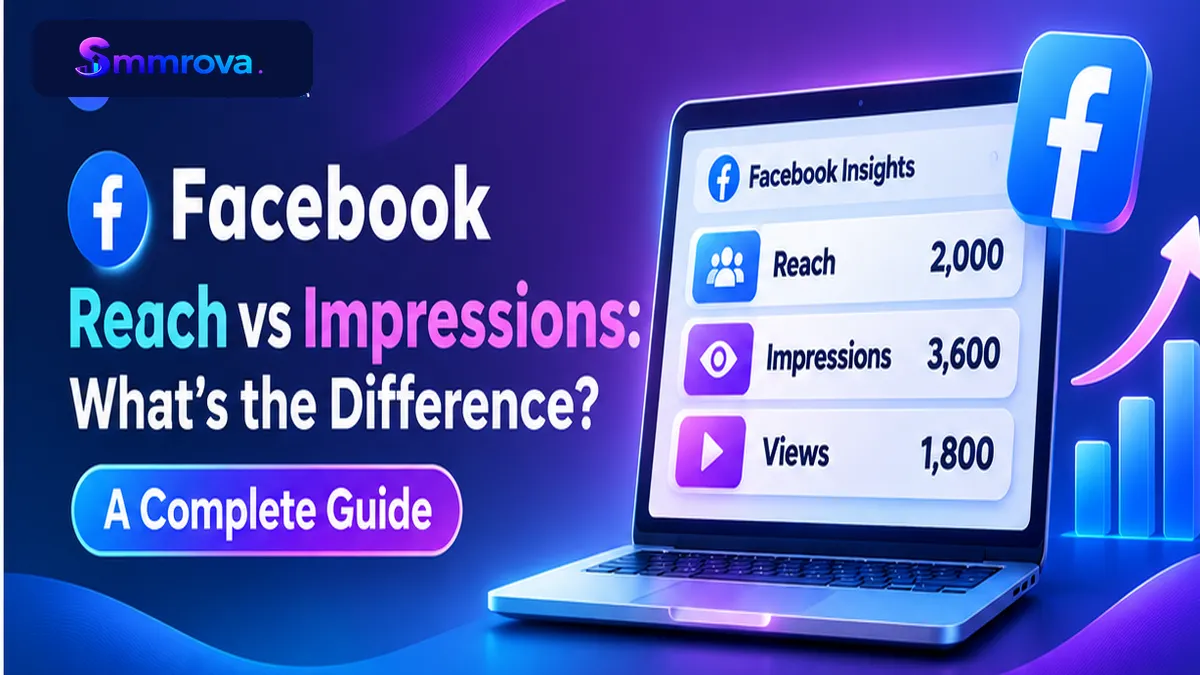
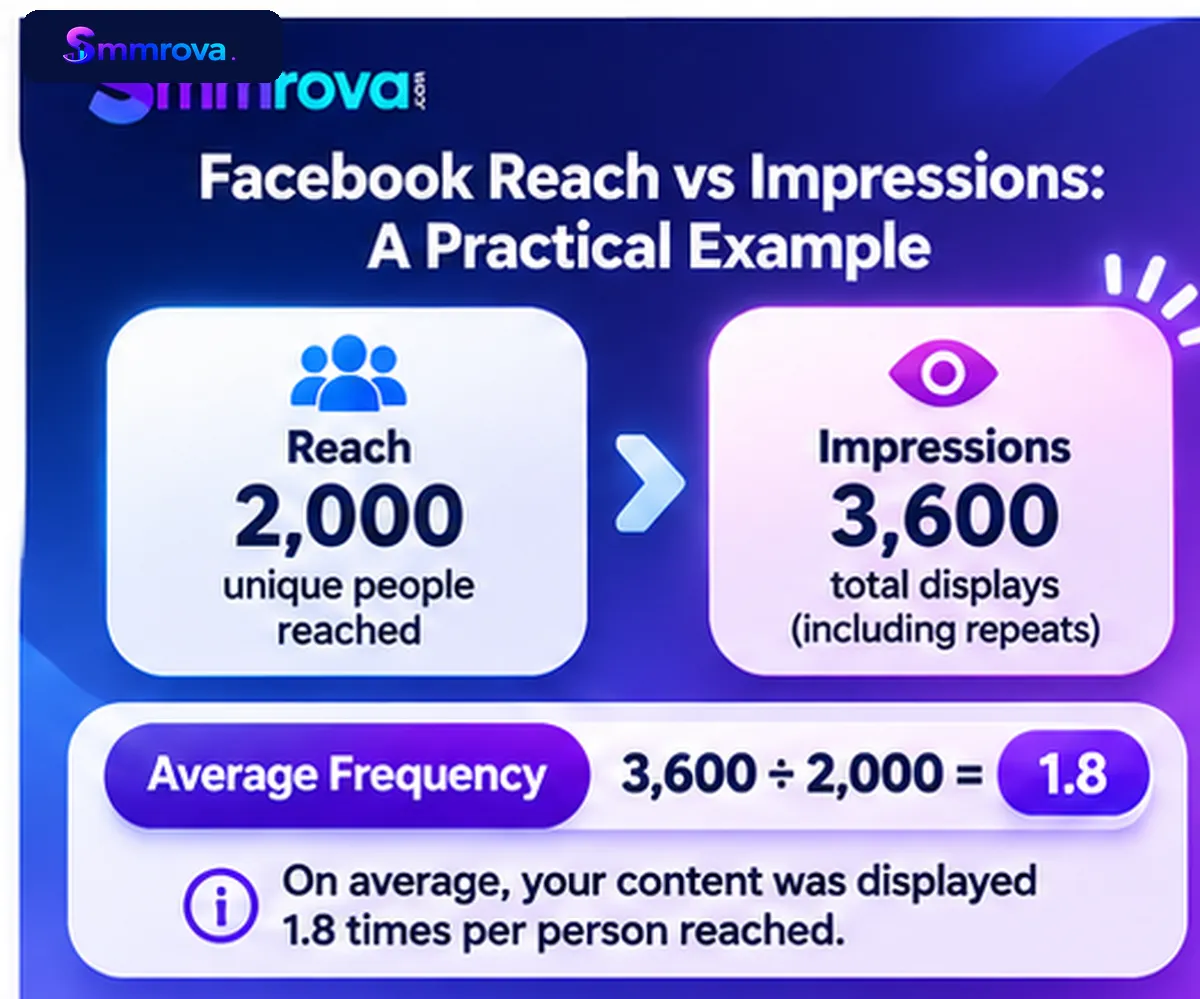
- Reach: 2,000 people
- Impressions: 3,600 displays
- Post interactions: 120
This means approximately 2,000 unique people encountered the post, while the content was displayed 3,600 times in total under the report's counting rules.
You can calculate average impression frequency:
Average frequency = Impressions ÷ Reach
3,600 ÷ 2,000 = 1.8
In this simplified example, the post generated an average of 1.8 impressions per person reached.
This calculation is useful when reach and impressions are defined consistently for the same content, audience, and reporting period. Do not substitute Views for impressions without confirming that the comparison is appropriate.
How to Check Facebook Reach, Views, and Impressions
Facebook Page owners can review content performance through the professional tools available to their accounts. The exact navigation and available metrics may change over time.
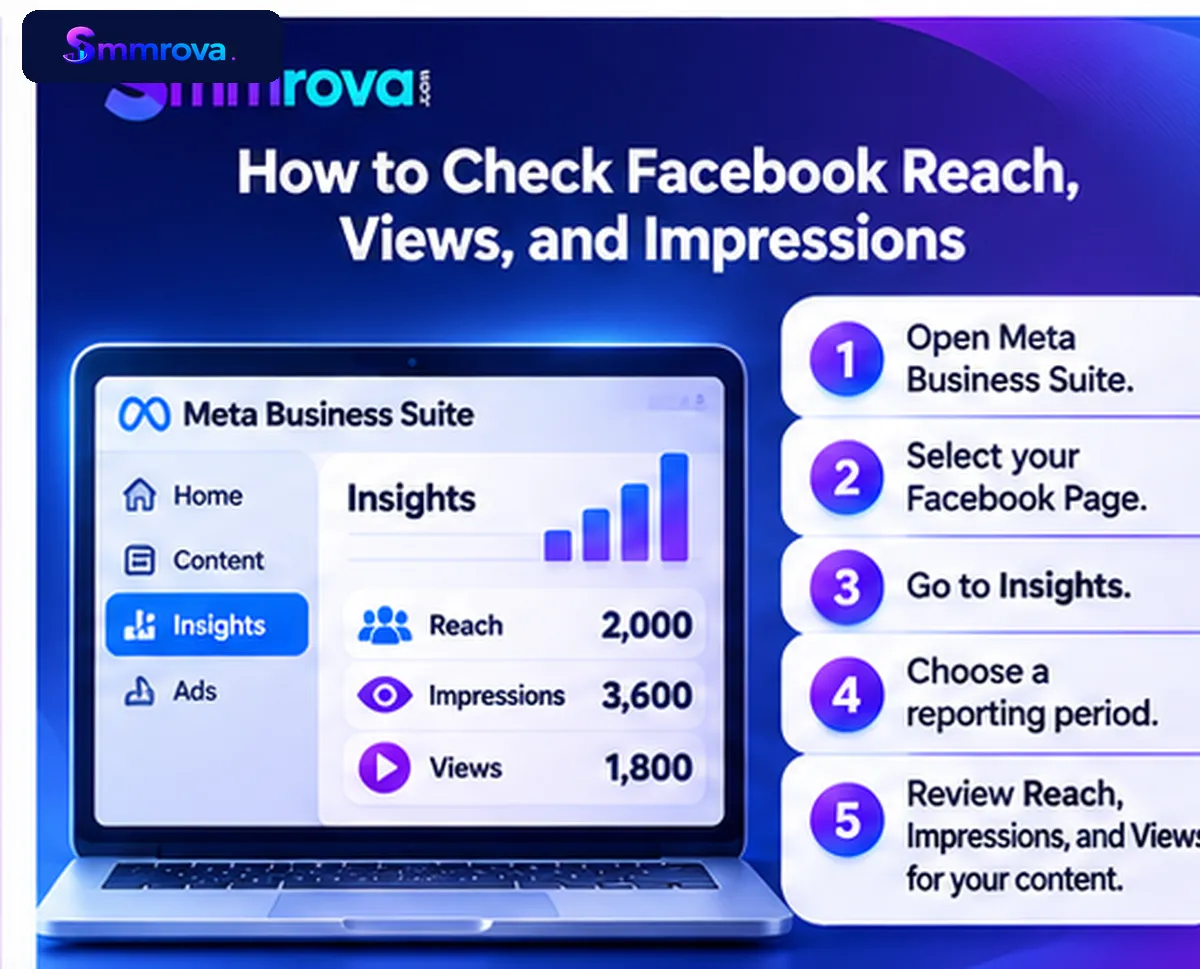
Using Meta Business Suite
- Open Meta Business Suite and select the Facebook Page you manage.
- Navigate to the Insights or content-performance area.
- Choose the reporting period you want to analyze.
- Review the available metrics for your Page, posts, or videos.
- Open individual content reports for more detailed performance information.
Depending on your account and the report, you may see Reach, Views, interactions, watch-related metrics, or other measurements.
For paid campaigns, review Meta Ads Manager separately. Advertising reports may include reach, impressions, frequency, and campaign-specific results.
Tip: Always check whether a number refers to organic content, paid distribution, or combined activity before comparing results.
Which Metric Is More Important for Facebook Marketing?
Neither reach nor impressions is automatically the better metric. The right choice depends on your marketing objective.
Choose Reach When Your Goal Is Awareness
If you want more people to discover your business, reach provides a useful estimate of audience breadth.
For example, a local restaurant announcing a new menu may want to know how many different people encountered its announcement.
Review Impressions and Frequency for Advertising Exposure
When running paid campaigns, impressions and frequency can help you understand how often your ads appear to the audience.
These metrics are most useful when considered alongside campaign results, costs, and audience response.
Use Views for Content Distribution Analysis
Where Views is available, it can help you understand content viewing activity. For videos, also review relevant watch-time and retention metrics if your dashboard provides them.
Remember that a high view count does not necessarily mean people watched the full video or became interested customers.
Track Business Outcomes, Not Just Visibility
For a small business, useful results may include website visits, qualified messages, enquiries, leads, and completed purchases.
Reach and Views provide context, but they do not replace these business outcomes.
How to Improve Facebook Reach Naturally
Improving reach starts with publishing content that people actually want to see.
- Understand your audience: Focus on the questions, needs, and interests of your ideal customers.
- Create useful posts: Share tutorials, product demonstrations, customer FAQs, and practical advice.
- Use relevant formats: Experiment with photos, short videos, Reels, and other formats appropriate to your audience.
- Publish consistently: Maintain a realistic schedule rather than posting large amounts of low-value content.
- Encourage genuine discussion: Answer questions and respond thoughtfully to relevant comments.
- Review your Insights: Compare content over similar reporting periods to identify useful patterns.
No posting schedule, format, or engagement tactic can guarantee organic reach. Facebook distribution depends on multiple factors that can change over time.
Do Facebook Likes or Video Views Increase Reach?
Facebook likes and video views are different from reach. A post may receive reactions without reaching a large new audience, and a video may generate viewing activity without producing meaningful customer interest.
For readers comparing service categories, Smmrova provides information about Facebook likes services and Facebook video views services.
These services should not be confused with Meta's organic distribution system. Purchased or artificial engagement does not guarantee additional organic reach, better rankings in the Feed, sales, or customer trust. Activities that violate Meta's policies may also be removed or restricted.
For a broader overview of service categories and important considerations, read our Facebook SMM Panel Bangladesh guide.
Common Facebook Analytics Mistakes to Avoid
- Confusing reach with impressions: Unique audience size and total displays are different measurements.
- Assuming Views always equals impressions: Definitions vary by report and content format.
- Comparing different date ranges: Use consistent reporting periods when evaluating performance.
- Mixing paid and organic data: Separate reporting sources where possible.
- Ignoring audience quality: Large visibility numbers do not guarantee relevant visitors or customers.
- Comparing old and new metrics without context: Reporting changes can affect historical comparisons.
Frequently Asked Questions
What is the difference between Facebook reach and impressions?
Reach measures the unique audience exposed to content within the report's scope. Impressions traditionally count how many times content was displayed, including repeat appearances.
Can Facebook impressions be higher than reach?
Yes. One person may encounter the same content multiple times, increasing impressions without increasing the unique audience count.
Is Facebook reach the same as Views?
No. Reach focuses on unique audience exposure, while Views measures viewing activity according to Meta's applicable reporting definition.
Did Facebook replace impressions with Views?
Meta has introduced Views in content reporting, but impressions remain relevant in advertising and certain other reports. The terminology and availability depend on the reporting surface.
Does higher reach mean more sales?
Not necessarily. Reach measures audience exposure, not purchase intent. Track enquiries, conversions, and other business outcomes to evaluate marketing effectiveness.
Where can I find Facebook Insights?
Page managers can review available insights through Meta Business Suite or other professional tools provided for their accounts. The exact menu labels and available metrics may vary.
Final Thoughts
Understanding Facebook reach vs impressions helps you interpret content distribution more accurately. Reach tells you about audience breadth, impressions traditionally describe repeated exposure, and Views adds another perspective on content viewing activity.
The smartest approach is to read each metric in its proper context, compare consistent reporting periods, and focus on outcomes that support your business goals.
Use Facebook Insights to learn what works, improve your content, and make decisions based on meaningful performance rather than impressive-looking numbers alone.
 Up nextFacebook Video Marketing Strategy for Small BusinessesFacebook · 16 min read
Popular Facebook services
Ready to grow your social media?
Create a free SmmRova account and pay with bKash, Nagad or Rocket. We never ask for your password.
Create Free Account View ServicesQuestions before you order? Message us on WhatsApp