In this article
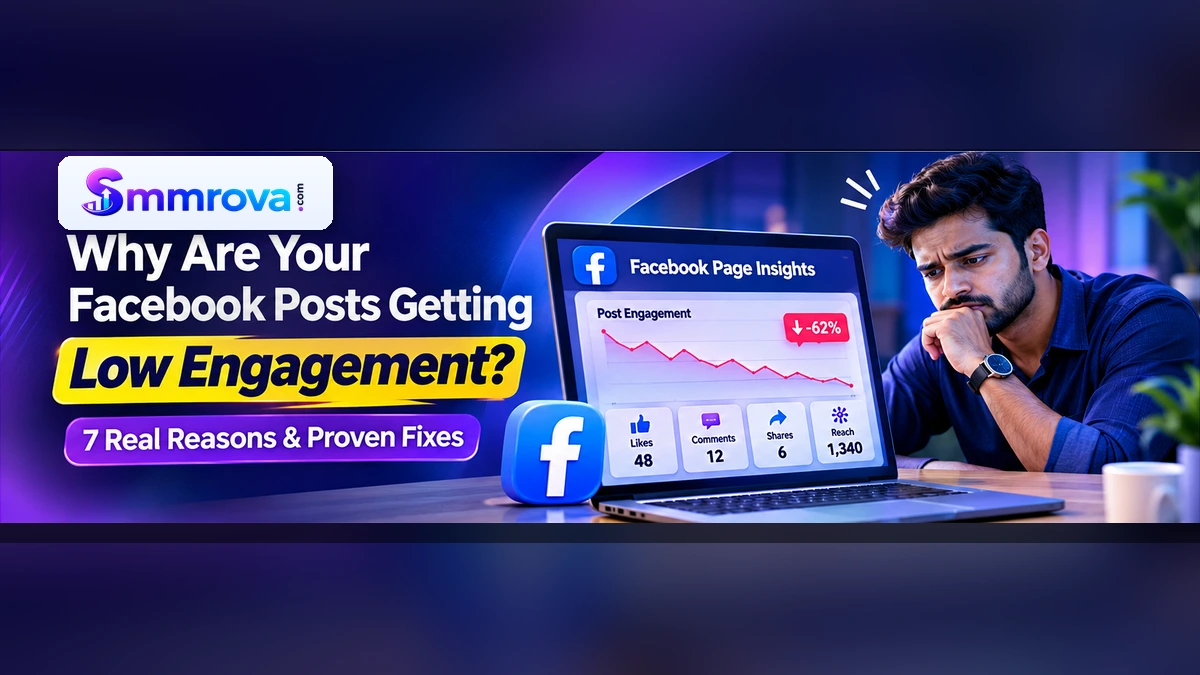
Facebook low post engagement can be frustrating, especially when you publish regularly but receive very few likes, reactions, comments, or shares. Understanding why people are not interacting with your content is the first step toward improving your Facebook Page performance.
However, low Facebook engagement does not always mean your Page is failing. Sometimes your content reaches the wrong audience. In other cases, the post format, publishing time, content quality, or audience expectations may not match.
The best way to improve Facebook engagement is to understand what is happening before changing your entire content strategy. This guide explains seven common reasons for low engagement and shows you practical ways to diagnose and improve your Facebook posts.
How to Diagnose Facebook Low Post Engagement Using Page Insights
Facebook post engagement refers to the interactions people have with your content. Depending on the post and the available reporting, these interactions can include:
- Likes and other reactions
- Comments and replies
- Shares
- Link clicks and other post clicks
- Other content interactions reported in your Page Insights
A post receiving fewer reactions is not automatically unsuccessful. For example, a business post may receive fewer likes but generate useful website clicks or customer messages.
Instead of judging a post by its reaction count alone, compare its reach, interactions, clicks, and other results against similar posts and your own previous performance.
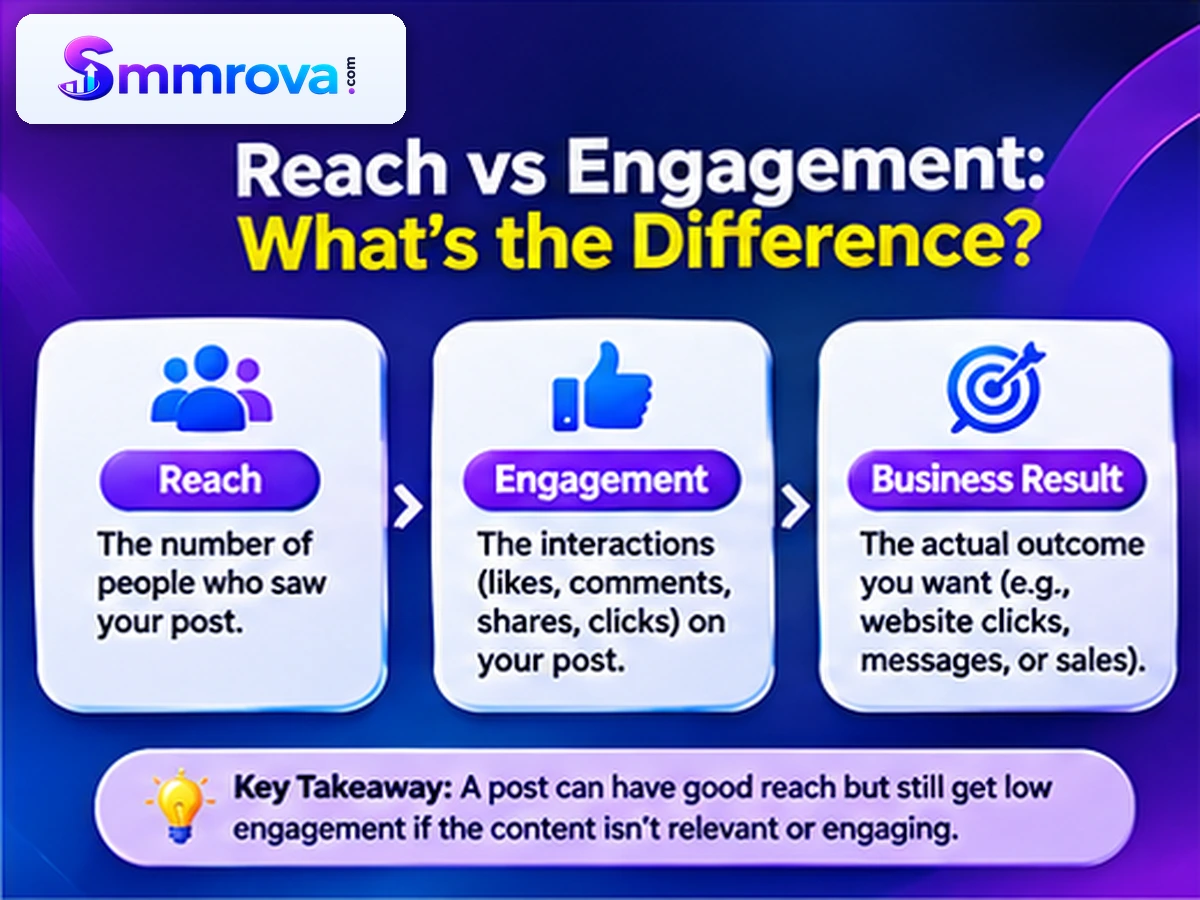
There is also an important distinction:
- Low reach: Your content is being seen by fewer people.
- Low engagement: People may see your content but choose not to interact with it.
- Low conversion: People interact with your content but do not take the action your business needs.
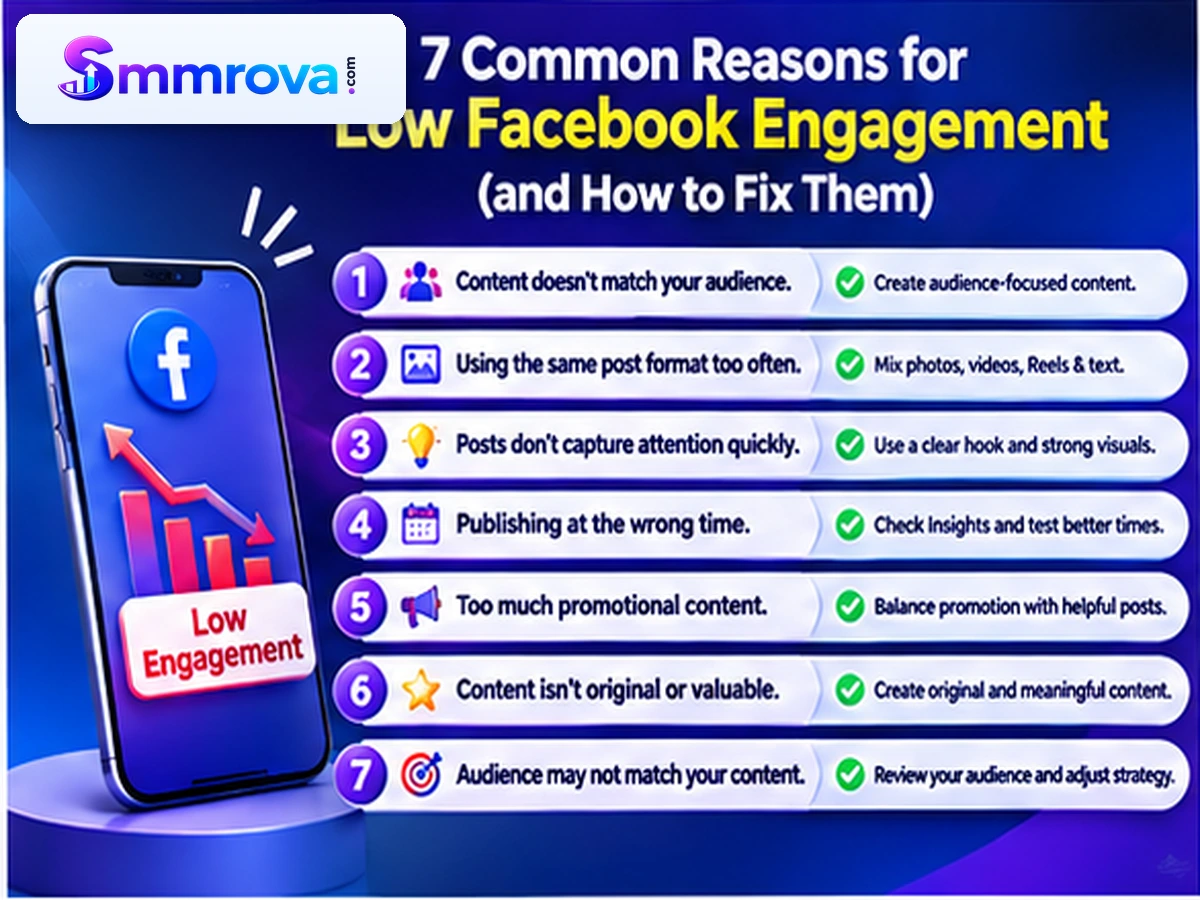
7 Common Reasons Your Facebook Posts Get Low Engagement
1. Your Content Does Not Match Your Audience's Interests
One of the most common reasons for low Facebook engagement is publishing content that does not match what your audience actually wants to see.
Imagine that you manage a clothing business Page. Your audience may be interested in new collections, product prices, styling ideas, fabric details, and customer experiences. If most of your posts contain generic promotional messages, people may have little reason to comment or share them.
How to fix it:
- Understand the problems and interests of your target audience.
- Publish content that answers common customer questions.
- Share helpful information instead of constantly promoting products.
- Use feedback and comments to discover what people want to know.
Before creating your next post, ask yourself: Would my target audience find this useful, interesting, or relevant?
2. You Are Using the Same Post Format Too Often
Publishing the same type of content repeatedly can make your Page feel predictable. If every update is a promotional graphic or a block of text, some followers may gradually lose interest.
Facebook supports different content formats, including text updates, photos, videos, and Reels. Each format can serve a different purpose, depending on your audience and message.
Try experimenting with:
- Photo posts: Product images, project results, or behind-the-scenes photos.
- Short videos: Demonstrations, explanations, and quick tips.
- Text posts: Questions, opinions, announcements, and useful information.
- Carousel-style visuals: Step-by-step explanations and educational content.
- Customer-focused posts: Frequently asked questions, testimonials, and real experiences shared with permission.
Do not assume that one format will always perform better. Test different formats and identify which ones generate meaningful interactions for your particular audience.
3. Your Posts Do Not Capture Attention Quickly
People scroll through their Facebook feeds quickly. If the main idea of your post is unclear, they may move on without reading it or interacting with it.
A long introduction, generic headline, or confusing visual can make a useful post difficult to understand.
How to improve your opening:
- Start with a question your audience genuinely cares about.
- Explain the main benefit near the beginning.
- Use a clear and relevant image or video.
- Break long captions into shorter paragraphs.
- Give readers a specific reason to continue reading.
For example, instead of writing "Welcome to our Page, we offer quality products," a clothing store could write "Looking for comfortable everyday outfits? Here are three styles worth considering."
The second example communicates a more specific benefit and gives the audience a reason to pay attention.
4. You Are Publishing When Your Audience Is Less Active
Publishing time can affect how many of your followers are available to see and interact with a post. However, there is no single posting time that works for every Facebook Page.
Your audience's location, working hours, interests, and daily habits all matter. A Bangladeshi audience may have different activity patterns from an audience in the United States or the United Kingdom.
How to fix it:
- Open your Page's Insights through Meta Business Suite.
- Review the audience and content performance information available to your Page.
- Identify the periods when your audience is active, where that information is available.
- Test different publishing times over several posts.
- Compare the results instead of relying on generic posting-time recommendations.
Keep the audience and content type in mind when evaluating the results. A posting time that works for one type of post may not work equally well for another.
5. Your Page Publishes Too Much Promotional or Repetitive Content
People follow Pages because they expect relevant information, entertainment, useful ideas, or updates. When nearly every post contains a sales message, discount announcement, or repeated advertisement, the content may become less interesting to followers.
Another problem is spam-like content. Meta has described actions against accounts that use unrelated captions, excessive hashtags, coordinated fake engagement, or repetitive spammy publishing practices. Such behaviour can result in lower content distribution.
How to fix it:
- Balance promotional updates with educational and entertaining content.
- Write captions that accurately describe the post.
- Use only relevant hashtags when appropriate.
- Avoid repetitive captions and meaningless engagement requests.
- Give people useful information before presenting a sales offer.
Your Page should offer value even when you are not directly selling something.
6. Your Content Is Not Original or Does Not Add Enough Value
Reposting other creators' content without meaningful changes may not be an effective long-term content strategy.
Meta's March 2026 original-content guidance explains that Facebook is prioritising original content in Feed and Reels. Simply re-uploading another creator's content or making minor changes, such as adding borders or changing the video speed, may be treated as unoriginal content.
Try creating more original material:
- Record your own product demonstrations.
- Share original photographs of your business or work.
- Explain a topic using your own knowledge and experience.
- Add meaningful commentary and fresh information when using third-party material.
- Show real processes, customer experiences, or behind-the-scenes activities.
Originality gives your audience a reason to recognise and return to your Page.
7. Your Audience May Not Match Your Current Content Strategy
A Page can have a large follower count and still receive limited engagement. This may happen when followers have different interests, live in different locations, or originally followed the Page for reasons that no longer match its content.
For example, a business may attract followers through a giveaway but later publish specialised product information. Some of those followers may not be interested in the new content.
How to improve audience relevance:
- Review your Page's available audience insights.
- Check whether your content matches your intended customer group.
- Pay attention to meaningful comments, messages, and clicks.
- Make your Page's topic and purpose clear.
- Build content around the audience you actually want to reach.
Remember that a relevant audience is more valuable to a business than a large number that does not connect with its content.
How to Identify the Problem Using Facebook Page Insights
Before changing your content strategy, review the performance information available through Meta Business Suite. Insights can help you understand what is working and where your Page may need improvement.
Follow these steps:
- Open Meta Business Suite: Select the correct Facebook Page from your available accounts.
- Go to Insights: Open the Insights section from the navigation menu.
- Choose a date range: Start with the recent 28-day overview and compare it with an earlier period when useful.
- Review content performance: Look at available metrics such as views, interactions, follows, and recent content.
- Compare individual posts: Identify which topics and formats perform better or worse.
- Check business outcomes: If your goal is enquiries or sales, review messaging conversations, link clicks, and relevant customer actions.
Use the following examples to interpret what you find:
| What you notice | What to investigate |
|---|---|
| Low reach and low interactions | Audience relevance, content distribution, format, and publishing consistency. |
| Good reach but few interactions | Content relevance, opening message, creative quality, and audience interest. |
| Good reactions but few comments | Whether the content creates a genuine reason for discussion. |
| Good interactions but few enquiries | Offer clarity, call to action, contact information, and customer journey. |
Do not compare every post as if it had the same purpose. A sales announcement, educational image, and short video may produce different types of results. Compare similar formats and objectives wherever possible.
Practical Ways to Improve Facebook Post Engagement
Once you understand the possible causes, start improving your content with small, measurable changes.
Create Content Around Real Audience Questions
Look at the questions customers ask in messages, comments, and conversations. Turn those questions into helpful posts. This makes content creation more relevant and reduces the need to guess what people want.
Use Clear and Relevant Visuals
Use original photographs, useful graphics, and videos that communicate the main message. Avoid cluttered designs and excessive text that makes a post difficult to understand.
Encourage Genuine Conversations
Ask relevant questions when they naturally fit the topic. Respond to comments with useful answers and participate in discussions. Avoid asking people to leave meaningless comments or exchange reactions just to inflate engagement.
Test One Change at a Time
If you change the format, caption style, publishing time, and audience strategy simultaneously, it becomes difficult to understand which change influenced the results.
Test one or two variables at a time, record the results, and build your next content decisions around what you learn.
Keep a Consistent but Sustainable Publishing Routine
Consistency helps you maintain communication with your audience. However, publishing more posts is not automatically better. Choose a schedule that allows you to create relevant content and respond to your audience properly.
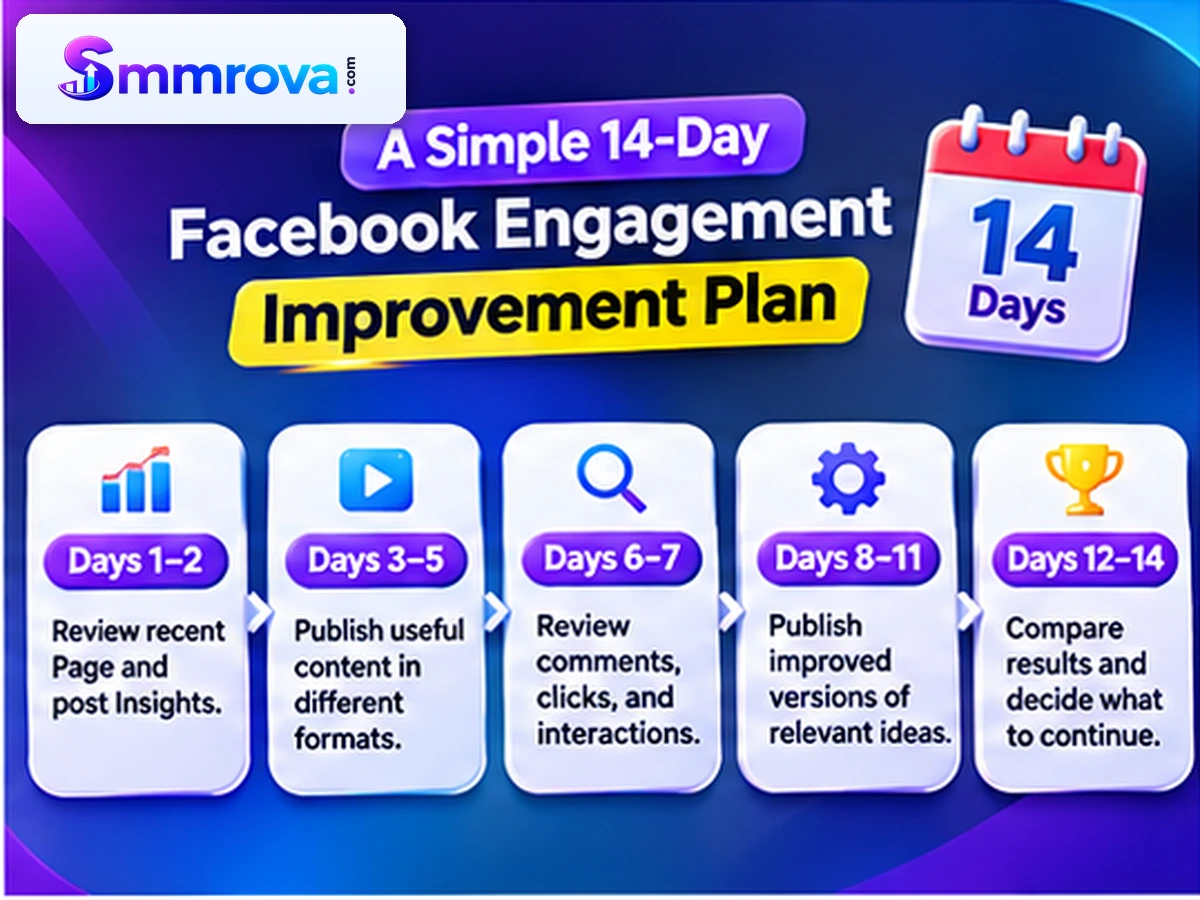
A Simple 14-Day Facebook Engagement Improvement Plan
Here is a practical starting plan for Page owners who want to understand their engagement problems without changing everything at once.
| Period | Action | Purpose |
|---|---|---|
| Days 1–2 | Review recent Page and post Insights. | Establish a performance baseline. |
| Days 3–5 | Publish useful content in two different formats. | Test audience response to content formats. |
| Days 6–7 | Review comments, clicks, reach, and interactions. | Identify early patterns. |
| Days 8–11 | Publish improved versions of relevant content ideas. | Test whether the changes help. |
| Days 12–14 | Compare results with the initial baseline. | Decide what to continue improving. |
This is a testing framework, not a guarantee of higher engagement within 14 days. Continue collecting data and refine your approach based on your actual audience.
Do Facebook Likes and Followers Automatically Improve Engagement?
No. A higher number of Page followers or post reactions does not automatically produce more meaningful interactions, better organic reach, or more sales.
Page followers and post likes can contribute to a visible social proof impression, but they are not substitutes for relevant content and genuine audience interest.
If you are researching different Facebook engagement options, you can review the following Smmrova service pages:
Before considering any third-party engagement service, review the applicable Facebook rules and the individual service terms. Artificial or coordinated engagement can be removed or restricted, and no service should be treated as a guarantee of improved organic performance.
For a broader explanation of Facebook service categories, ordering considerations, and platform-related risks, read our Facebook SMM Panel Bangladesh guide.
Frequently Asked Questions
Why is my Facebook Page engagement suddenly low?
Possible reasons include changes in audience interest, content format, posting time, content originality, or distribution. Compare recent Page Insights with previous performance before deciding what to change.
Does posting more frequently increase Facebook engagement?
Not necessarily. Publishing regularly can help maintain communication with your audience, but irrelevant or repetitive posts may not generate meaningful interactions. Prioritise content quality and audience relevance.
What is the best time to post on Facebook?
There is no universal best time for every Page. Review your own audience activity information in Insights and test different publishing times to identify patterns that work for your audience.
Can more Facebook followers solve low post engagement?
Not automatically. Followers represent an audience count, but they may not interact with every post. Relevant content and genuine audience interest remain important.
Should I use questions to increase Facebook comments?
You can ask relevant questions that encourage genuine discussion. However, avoid meaningless engagement requests or repetitive tactics designed only to inflate interaction counts.
Final Thoughts
Low Facebook post engagement is not a problem that can be solved by changing one setting or publishing more frequently. It requires understanding your audience, reviewing content performance, and identifying which parts of your strategy need improvement.
Start by checking your Page Insights, reviewing your best-performing posts, experimenting with different content formats, and publishing information that your audience genuinely finds useful.
Most importantly, focus on meaningful interactions rather than chasing reaction counts. A relevant audience that trusts your Page and takes useful actions can be more valuable to your business than a large number of inactive followers.
Build your Facebook strategy around useful content, consistent testing, and genuine audience relationships. That is a more sustainable approach to improving your Page's performance.
 Up nextFacebook Video Marketing Strategy for Small BusinessesFacebook · 16 min read
Popular Facebook services
Ready to grow your social media?
Create a free SmmRova account and pay with bKash, Nagad or Rocket. We never ask for your password.
Create Free Account View ServicesQuestions before you order? Message us on WhatsApp