In this article
A TikTok video can receive thousands of views without keeping viewers until the end. Another video may receive fewer views but hold attention for much longer. To understand this difference, creators need to look beyond view counts and examine how long people watch and how many complete the video.
TikTok watch time and completion rate are two useful ways to evaluate video retention. Watch time helps explain how long viewers stay, while completion rate describes the proportion of views that reached the end of a video when that metric is available in the report.
This guide explains total watch time, average watch time, full-video views, and completion rate. It also includes practical examples, ways to read retention patterns, and steps for reviewing video analytics without confusing organic creator metrics with advertising reports.
What Is TikTok Watch Time?
Watch time refers to the amount of time viewers spend watching a video. It helps creators understand whether people stay with the content or leave shortly after it starts.
There are two related measurements to understand:
- Total watch time: The combined time viewers spent watching a video across its views, as reported by the relevant analytics dashboard.
- Average watch time: The average amount of time viewers watched the video according to the metric shown in the report.
For example, imagine a 30-second TikTok video has an average watch time of 18 seconds. This means the average viewing duration shown in the report is 18 seconds. It does not mean every viewer watched exactly 18 seconds.
TikTok's creator analytics guidance identifies average watch time and the duration viewers watched as useful information in individual video analytics. The exact data labels and availability can change with account type, region, app version, and reporting interface.
What Is TikTok Video Completion Rate?
Video completion rate describes the percentage of video views that reached the end of the video. It helps you understand how often viewers watched the full content rather than leaving before it finished.
In TikTok's project reporting documentation, completion rate is defined as complete video views divided by total video views. TikTok Ads reporting also provides video views at 25%, 50%, 75%, and 100% of a video's length.
However, creators should not assume that every organic TikTok post displays a separate completion-rate percentage. Depending on the account and report, you may see average watch time, watched-full-video information, or other retention indicators instead. Always check the metric name and its definition in the dashboard you are using.
TikTok Watch Time and Completion Rate: Key Differences
Both metrics relate to retention, but they answer different questions.
| Metric | What It Measures | What It Helps You Understand |
|---|---|---|
| Total watch time | Combined viewing duration | How much time viewers spent watching the video overall. |
| Average watch time | Average viewing duration | How long a typical view or viewer watched, according to the selected report. |
| Completion rate | Percentage of views that reached the end | How often viewers watched the entire video. |
| Full-video views | Number of views that reached 100% of the video | How many completed views were recorded. |
A video can have a relatively high average watch time but a lower completion rate. This can happen when many viewers watch a substantial part of the video but leave before the ending.
Likewise, a short video may have a high completion rate because viewers can finish it quickly, while a longer video may receive more total watch time even if fewer viewers reach the end. Compare videos of similar lengths and purposes whenever possible.
How to Calculate TikTok Completion Rate
When a report provides completed views and total video views for the same video and reporting period, you can understand the completion percentage using this formula:
Completion Rate = (Completed Video Views ÷ Total Video Views) × 100
Consider this example:
- Total video views: 1,000
- Completed video views: 350
- Completion rate: (350 ÷ 1,000) × 100 = 35%
In this example, 35% of the recorded video views reached the end of the video according to the selected report's definition.
This is a simplified calculation for reports that use this denominator. TikTok Ads and TikTok One reporting may define their video-view metrics by campaign or reporting context, so use the metric definitions provided in the specific dashboard rather than mixing different reports.
Average Watch Time vs Average Percentage Viewed
Average watch time is a duration, usually shown in seconds. Average percentage viewed expresses the average viewing duration as a proportion of the video's total length.
A simplified calculation is:
Average Percentage Viewed = (Average Watch Time ÷ Video Length) × 100
For example, if a video is 20 seconds long and its reported average watch time is 12 seconds:
- Video length: 20 seconds
- Average watch time: 12 seconds
- Average percentage viewed: (12 ÷ 20) × 100 = 60%
This 60% is an average viewing-duration ratio. It does not mean that 60% of viewers watched the entire video. Completion rate measures full-video completions, not average viewing duration.
Also remember that some TikTok Ads metrics include replay time. TikTok distinguishes average play time per user from average play time per video view, and its advertising metric definitions explain that replay time is included in those measures. Do not assume every TikTok analytics screen uses the same calculation.
How to Read a TikTok Video Retention Pattern
Retention information can help you identify the parts of a video where viewers lose interest. Where a retention graph is available, look at the pattern rather than focusing on one number.
1. A Sharp Drop at the Beginning
If many viewers leave near the start, review the opening. The video may take too long to introduce the topic, the first visual may not be clear, or the opening may promise something that the rest of the video does not deliver.
Try introducing the main question, result, or demonstration earlier. Keep the opening relevant to the actual content.
2. A Gradual Drop Through the Middle
A gradual decline can suggest that some viewers lose interest as the video continues. Review whether the explanation becomes repetitive, whether there are unnecessary pauses, or whether the main point is delayed.
Try shortening sections that do not add useful information and make each part lead naturally into the next.
3. A Strong Retention Pattern Near the End
If a meaningful proportion of viewers reaches the final part, examine what makes that section useful. It may contain the answer, demonstration, reveal, or conclusion that viewers wanted.
Consider bringing important information forward in future videos, while still keeping a satisfying ending.
4. A Replay or Looping Pattern
Some viewers may replay a section to understand a detail, see a demonstration again, or enjoy a moment. Where your dashboard provides replay-related information, interpret it alongside average watch time and the video's purpose.
Do not assume that a replay automatically means the video was confusing or successful. Review the content and other available signals before deciding.
How to Check TikTok Watch Time and Completion Metrics
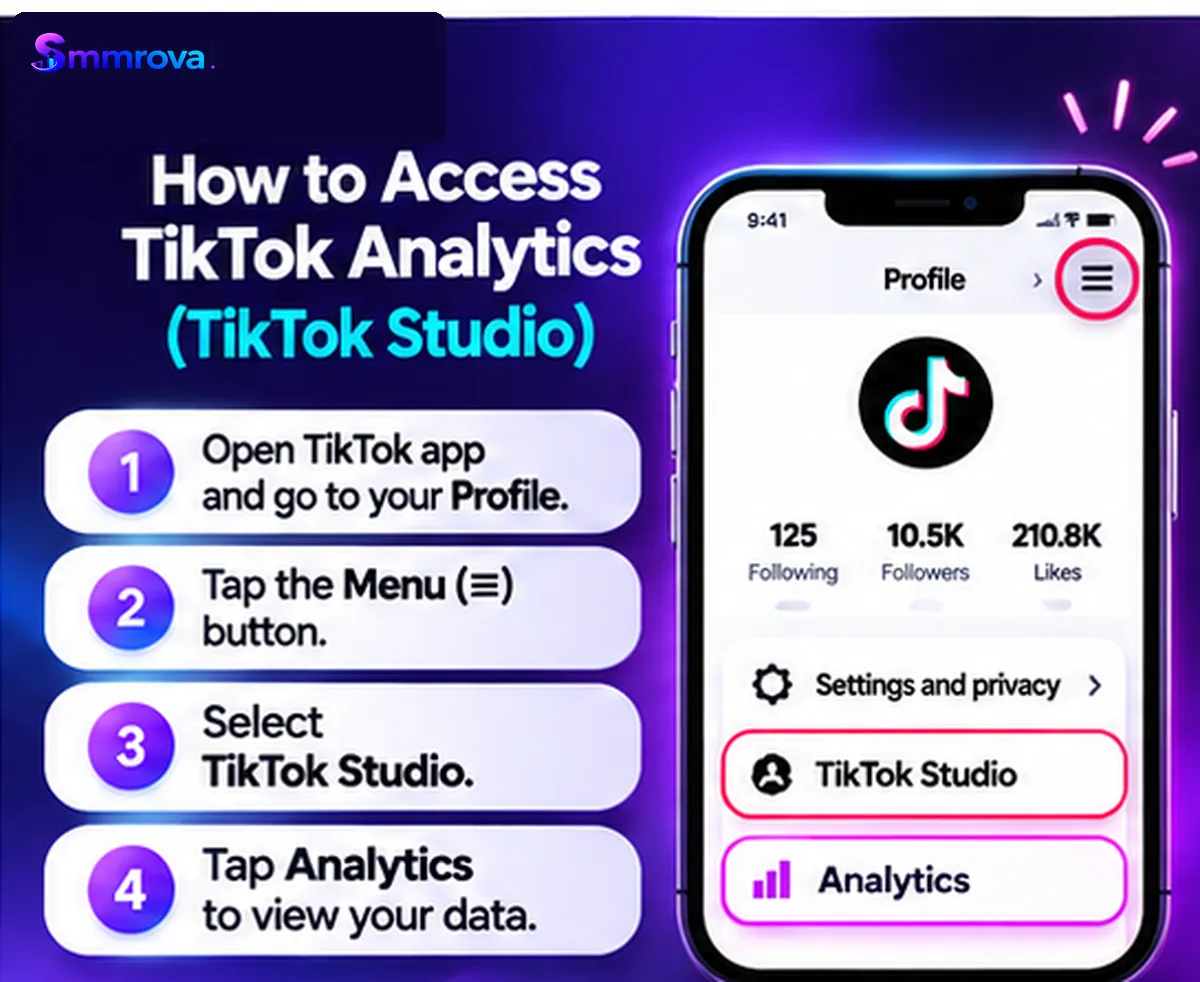
You can review available video analytics through TikTok Studio or the analytics option on an individual post. The interface may vary by account and app version.
Using the TikTok Mobile App
- Open TikTok and go to your Profile.
- Tap the Menu button at the top.
- Select TikTok Studio.
- Open Analytics and enable it if TikTok asks you to get started.
- Choose the relevant content or post analytics section.
- Open an individual video to review the available performance details.
Using a Computer
- Visit TikTok Studio.
- Sign in to your account.
- Open the Posts or Analytics area available in your account.
- Select a video and open its analytics.
- Review the available watch-time and video-view metrics.
If a separate completion-rate percentage is not displayed for an organic post, do not invent one. Use the retention and full-video indicators actually provided by TikTok for that account. Advertising dashboards may expose more detailed video-play milestones than an ordinary organic post report.
How to Improve Watch Time and Completion Rate
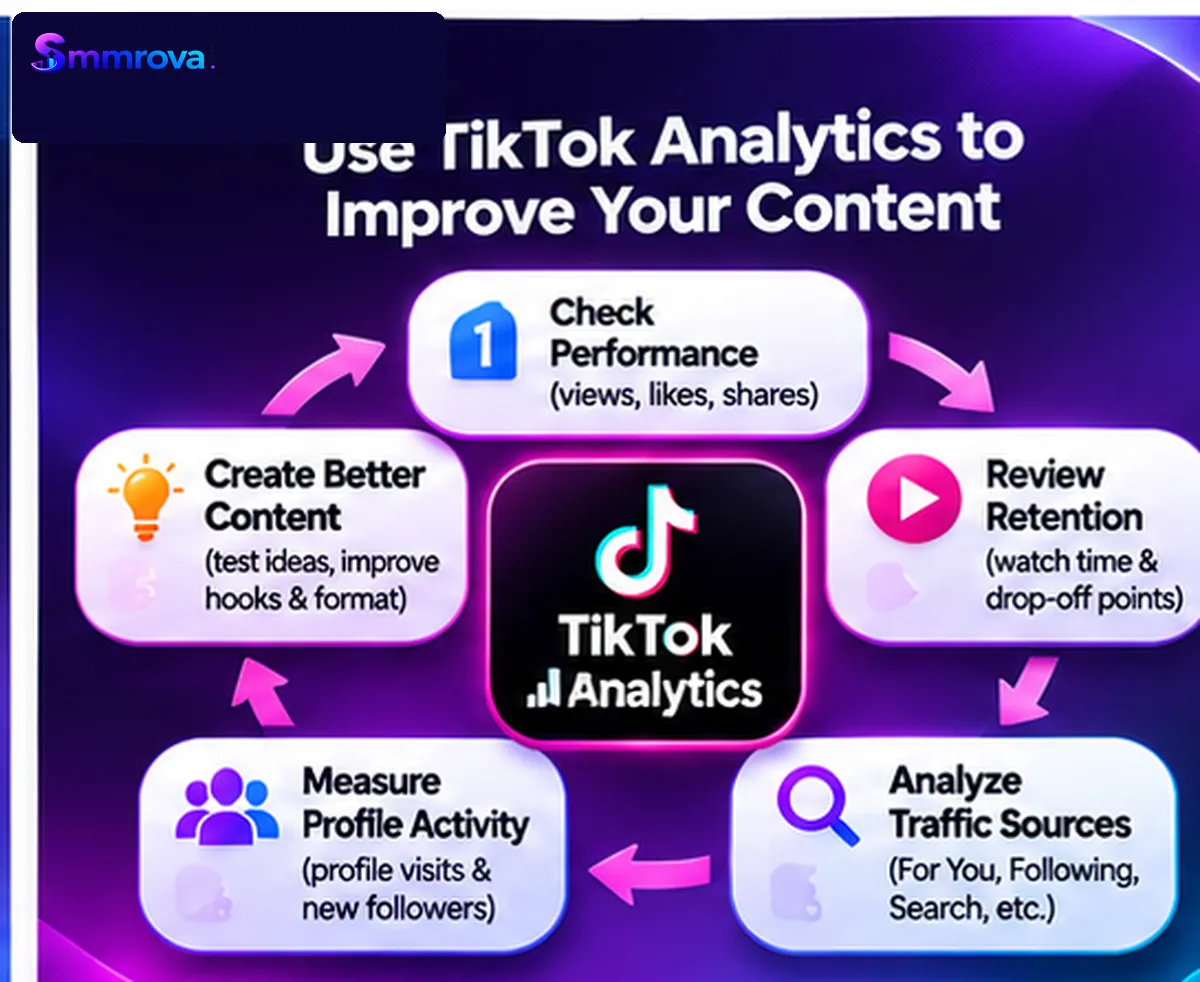
Analytics helps you decide what to test next. These practical adjustments can make videos clearer and easier to follow.
Start with the Main Point
Show the topic, problem, or benefit early. Avoid long greetings or introductions before viewers understand why the video matters.
Keep One Video Focused on One Idea
Trying to explain too many things in one short video can make it difficult to follow. Split large topics into smaller videos when that makes the explanation clearer.
Remove Unnecessary Pauses
Edit out repeated explanations, long gaps, and visuals that do not support the message. Keep enough time for viewers to understand important steps.
Use Clear Visuals and Captions
Make demonstrations easy to see and on-screen text easy to read. Captions can help viewers follow an explanation, especially when audio is unclear or unavailable.
Deliver What the Opening Promises
A strong hook should match the actual content. If the opening suggests a tutorial, give viewers the tutorial rather than delaying the promised information.
Test Different Lengths
Some ideas work better as short clips; others need more time. Compare videos with similar topics and objectives before deciding whether a shorter or longer format works better for your audience.
Common Mistakes When Measuring Video Retention
- Confusing average watch time with completion rate: One is a duration; the other is a percentage of completed views.
- Treating average percentage viewed as full-video completion: A 60% average viewing ratio does not mean 60% of viewers finished the video.
- Comparing videos of very different lengths: Use similar formats and objectives for more useful comparisons.
- Mixing organic and advertising metrics: Ads Manager can report view milestones and replay-aware play-time metrics that are not necessarily displayed in organic creator analytics.
- Judging one video in isolation: Review patterns across several comparable posts.
- Changing everything at once: Test a clearer hook, shorter edit, or different structure separately when possible.
- Assuming retention guarantees reach: TikTok recommendations use multiple signals. No single retention metric guarantees distribution.
How Watch Time Relates to TikTok Views and Likes
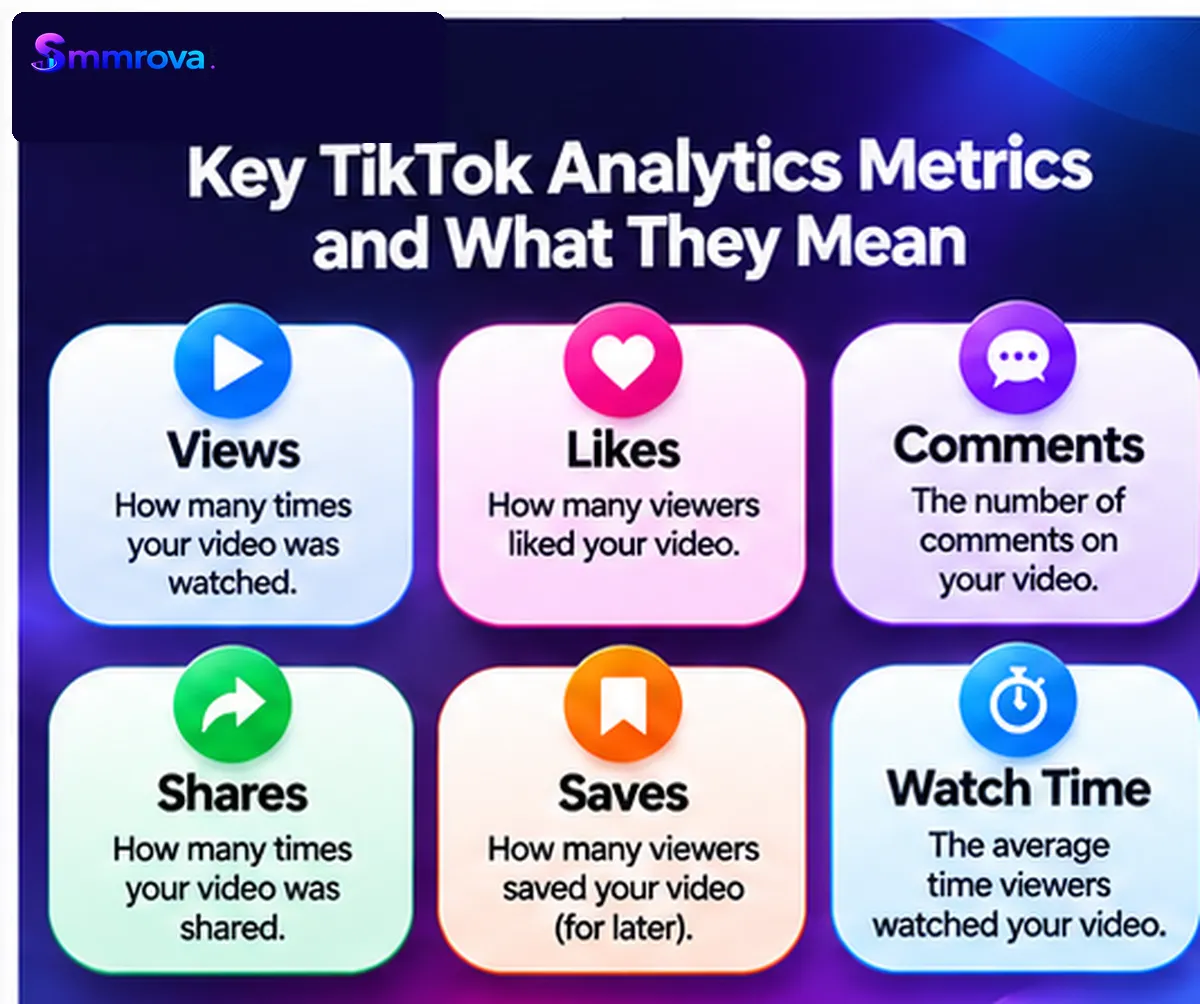
Views, likes, and watch time describe different parts of video performance. Views indicate plays, likes show a form of audience interaction, and watch-time metrics help you understand how long people stayed.
A video can receive many views and still have a short average watch time. It can also have a modest number of views but hold the attention of the people who watched it. That is why view count alone is not enough to judge retention.
For a broader guide to TikTok video views, read our TikTok Views Bangladesh guide. It covers view growth and wider video-performance practices, while this article focuses specifically on retention.
Important Note About Third-Party Views and Likes
Third-party engagement services should never be confused with real watch-time or retention improvement. A view or like count does not prove that people watched a video for a meaningful duration or completed it.
Smmrova has separate information pages for TikTok views services and TikTok likes services. These pages describe service categories, not tools for increasing average watch time or video completion. TikTok's Integrity and Authenticity rules prohibit trading or marketing services that artificially increase engagement. Review the platform's rules before considering third-party engagement offers.
For paid video promotion, use TikTok's official advertising or Promote tools and review the reporting definitions for the campaign you run. No third-party service can guarantee genuine retention, completion, reach, or sales.
Frequently Asked Questions
What is a good TikTok average watch time?
There is no single average watch-time target that works for every video. The useful result depends on video length, topic, audience, and objective. Compare similar videos on your own account and look for consistent improvements.
Is average watch time the same as completion rate?
No. Average watch time measures viewing duration, while completion rate measures the percentage of views that reached the end of the video when that metric is reported.
How do I calculate TikTok completion rate?
For a report that defines completion rate as completed views divided by total views, multiply completed views by 100 and divide by total views. Use the exact denominator shown by the relevant TikTok report.
Can average watch time be higher than the video length?
Some advertising play-time metrics include replay time, so reported averages can reflect repeated viewing. TikTok Ads distinguishes average play time per user from average play time per video view. Check the definition of the specific metric before comparing it with the video's duration.
Does a high completion rate guarantee more TikTok views?
No. TikTok recommendations consider multiple signals, including interactions and viewing behavior. A high completion rate does not guarantee that a video will receive more distribution.
Where can I find TikTok video retention analytics?
Open TikTok Studio from your Profile menu, enter Analytics, and select the relevant post or content report. Available retention information can vary by account, region, app version, and reporting type.
Final Thoughts
Understanding TikTok watch time and completion rate helps you see more than the number of times a video was played. Average watch time explains how long viewers stayed, while completion rate indicates how often they watched the full video when that metric is available.
Use retention information to improve openings, remove unnecessary pauses, make explanations clearer, and choose video lengths that fit the topic. Compare similar videos over time instead of chasing a single number.
Most importantly, create videos that deliver what viewers expect. Genuine attention and useful content are better foundations for long-term audience development than inflated engagement figures.
Official TikTok resources:
 Up nextHow to Understand TikTok Analytics: Views, Likes & SharesTikTok · 12 min read
Popular TikTok services
Ready to grow your social media?
Create a free SmmRova account and pay with bKash, Nagad or Rocket. We never ask for your password.
Create Free Account View ServicesQuestions before you order? Message us on WhatsApp