In this article
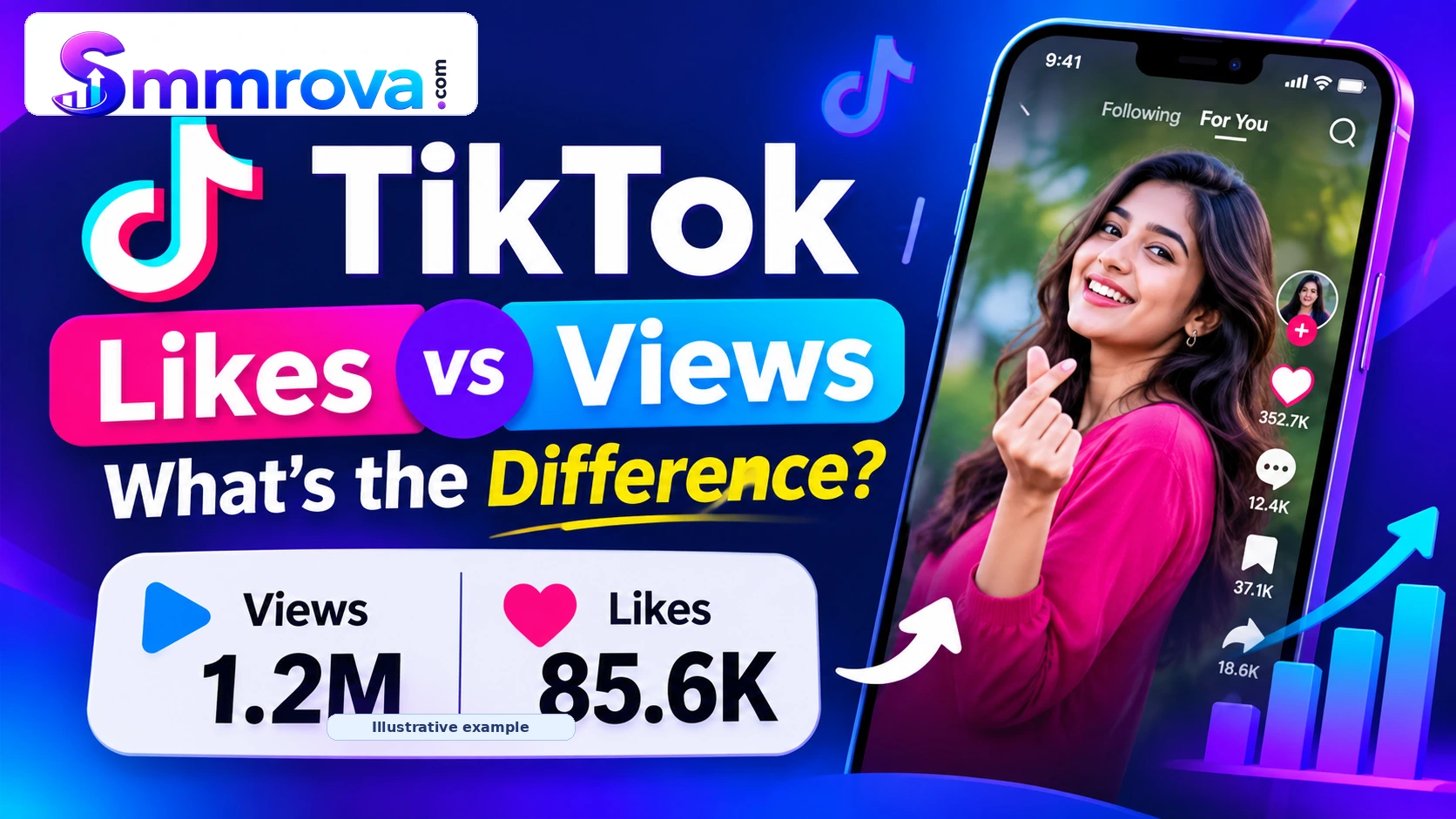
TikTok Likes vs Views is a common comparison for creators and businesses trying to understand video performance. A video may receive thousands of views but only a few likes, while another video may attract fewer views and a higher number of reactions.
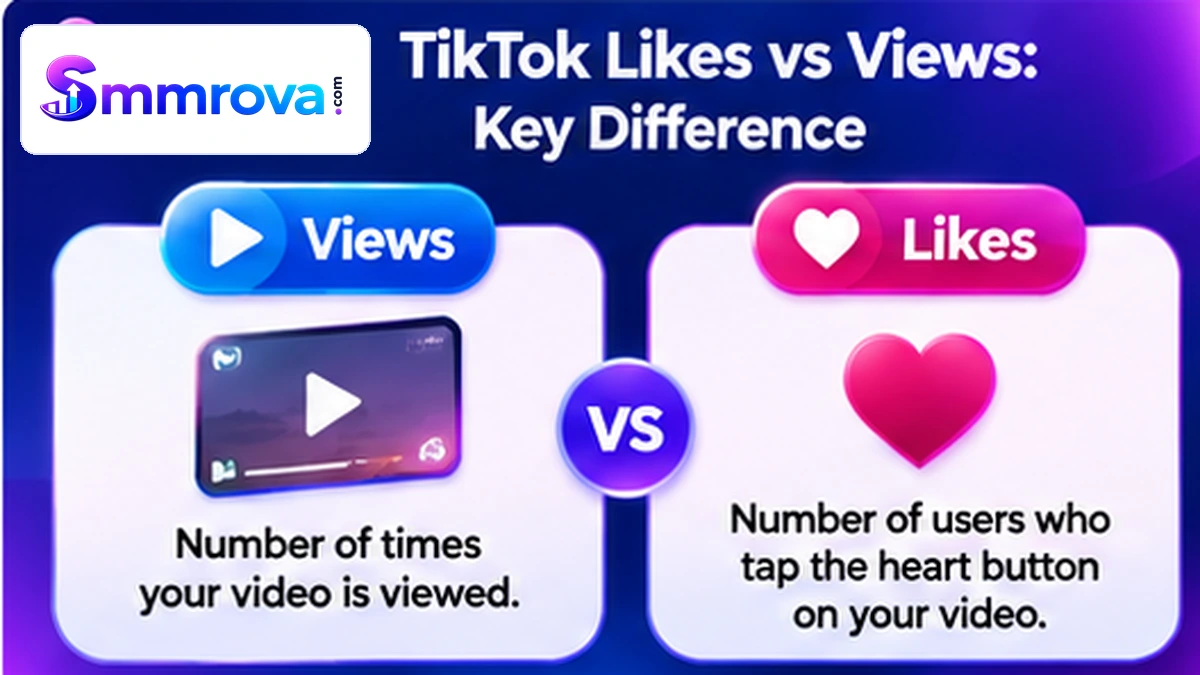
Both metrics are useful, but they tell you different things. Views indicate how often a video has been viewed, while Likes show how many times viewers chose to react by tapping the heart button.
Understanding how these numbers relate can help you review your TikTok content more accurately. In this guide, we will explain the difference between Likes and Views, how they relate to the For You feed, and how to calculate and interpret a simple like-to-view ratio using practical examples.
What Are TikTok Views?
TikTok Views represent the number of views recorded for a particular video. The view count is displayed on the video and can also be found in TikTok's video analytics and public data fields.
A view count is useful for understanding the playback activity associated with a video. However, it does not tell you how long people watched, whether they completed the video, or how many viewers became interested in your content.
For example, a video with 10,000 views has a higher recorded view count than a video with 2,000 views. But the number alone cannot tell you which video held viewers' attention longer or created more meaningful interactions.
What Does a View Count Tell You?
- How many views TikTok has attributed to the video.
- How the recorded view count changes over time.
- Whether a video is receiving more playback activity than comparable videos.
It does not directly measure unique viewers, total watch time, audience satisfaction, or business results. To understand those areas, review the additional analytics available for your video.
What Are TikTok Likes?
A TikTok Like is an interaction created when someone taps the heart button on a video. Each video has its own Like count, and the Likes accumulated across your videos also contribute to the total Likes displayed on your profile.
Likes provide one indication that viewers chose to respond to your content. Someone might like a video because it is entertaining, useful, informative, inspiring, or relevant to their interests.
What Does a Like Count Tell You?
- How many Likes a specific video has received.
- Whether viewers are choosing to react to the content.
- How the video's reaction count compares with similar posts from the same account.
However, a Like does not prove that someone watched the entire video, followed the creator, shared the content, or became a customer.
TikTok Likes vs Views: Key Differences
Views and Likes are connected to the same video, but they represent different forms of activity.
| Comparison | Views | Likes |
|---|---|---|
| What it measures | Recorded video views. | Heart-button reactions on the video. |
| Main purpose | Understand playback activity. | Understand viewer reactions. |
| What it can indicate | How much viewing activity a video receives. | How often viewers choose to like it. |
| What it does not prove | That viewers watched the full video. | That viewers watched for a long time or became followers. |
| Useful for | Comparing video exposure and playback activity. | Comparing reactions to similar content. |
For example, a video can receive 10,000 views and 200 Likes, while another receives 3,000 views and 300 Likes. The first has more views, but the second has more Likes.
Neither result should be judged without considering the video's topic, audience, age, format, and other engagement signals.
How Do Likes and Views Relate to the TikTok For You Feed?
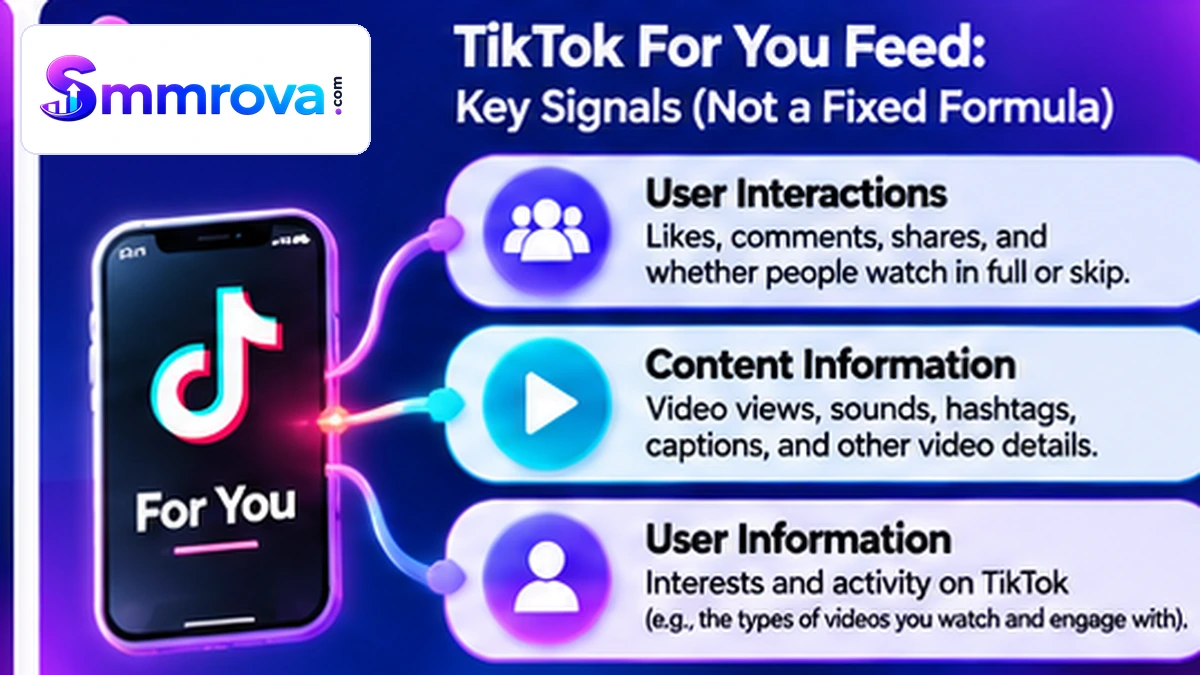
TikTok's For You recommendation system does not rank videos using only one public number. Its official explanation describes several categories of information, including user interactions, content information, and user information.
1. Likes Are One Type of User Interaction
When someone likes, comments on, or shares a video, that action provides information about their interests. TikTok can use these interactions as signals when predicting what content a person may want to watch.
However, a Like is only one type of interaction. It should not be treated as a guaranteed recommendation boost.
2. Views Are Part of Video Content Information
TikTok's recommendation explanation also lists the number of video views among the content information that may influence recommendations.
This does not mean that a high view count automatically sends a video to more For You feeds. The system evaluates a combination of factors, and the importance of individual factors can change.
3. Watch Behaviour Provides Additional Context
TikTok says user interactions can include whether people watch a video in full or skip it. For most users, interactions that include time spent watching are generally weighted more heavily than other factors.
This is why raw Views and Likes should not be the only metrics you review. Average watch time, completion, shares, and comments can help explain how people respond to your content.
Read TikTok's official explanation of content recommendations for more information about these signals.
Importantly, TikTok does not publish a fixed formula that tells creators how many Likes are required for a particular number of Views or how a specific like-to-view ratio affects ranking.
How to Calculate the TikTok Like-to-View Ratio
A simple way to compare Likes with Views is to calculate the percentage of Likes relative to the recorded Views.
Formula:
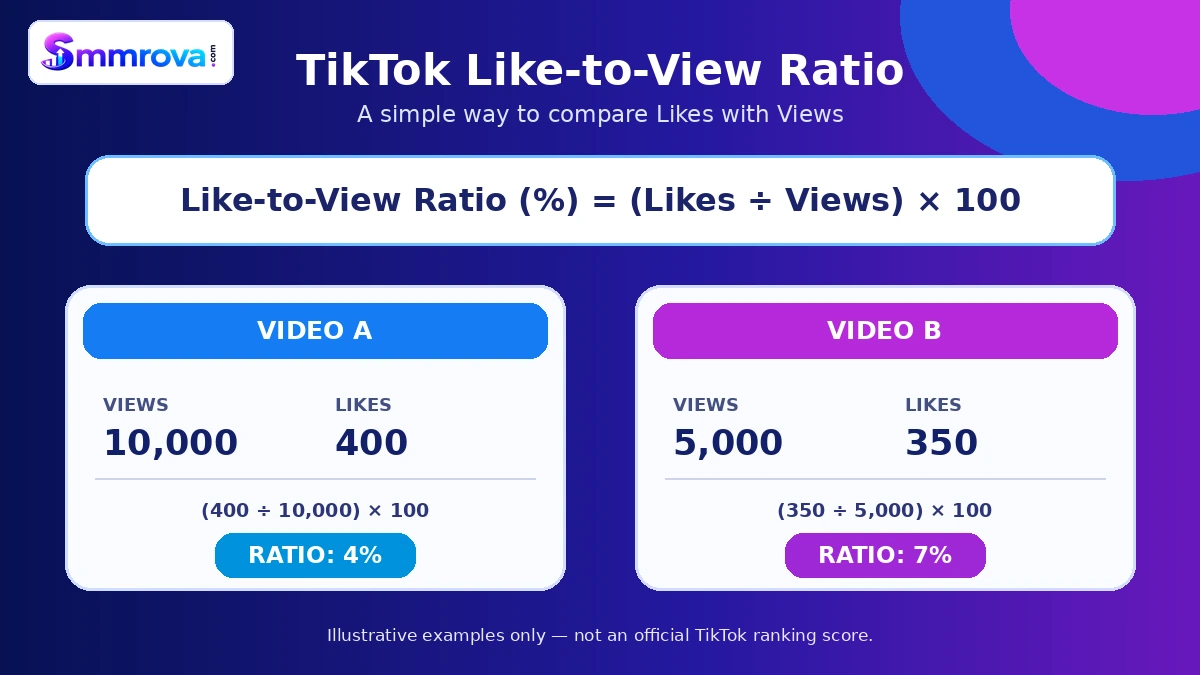
Like-to-View Ratio (%) = (Total Likes ÷ Total Views) × 100
This is a basic comparison created from two visible metrics. It is not an official TikTok ranking score or a guaranteed measure of content quality.
Example 1: Video A
- Total Views: 10,000
- Total Likes: 400
- Calculation: (400 ÷ 10,000) × 100
- Like-to-View Ratio: 4%
Example 2: Video B
- Total Views: 5,000
- Total Likes: 350
- Calculation: (350 ÷ 5,000) × 100
- Like-to-View Ratio: 7%
In this example, Video A received more Views, while Video B had a higher Like-to-View Ratio.
Video B therefore received more Likes relative to its recorded Views in this comparison. It does not automatically mean that Video B performed better in every other way or will receive more recommendations.
Example 3: Comparing Two Similar Videos
| Metric | Video A | Video B |
|---|---|---|
| Views | 8,000 | 8,000 |
| Likes | 240 | 480 |
| Like-to-View Ratio | 3% | 6% |
Both videos received the same number of Views, but Video B received twice as many Likes. This may be a useful starting point for investigating differences in the topics, openings, presentation, or audience response.
How to Read Your TikTok Like-to-View Ratio Correctly
The ratio is useful when comparing similar videos, but it can become misleading when you compare unrelated content or different reporting periods.
1. Compare Videos with Similar Topics
A tutorial, comedy video, product demonstration, and news-style clip may attract different types of audience behaviour. Compare similar content before deciding that one result is better.
2. Use the Same Reporting Period
Do not compare a video published yesterday with a video that has been available for several months without considering the difference in time. Give each video a comparable observation period.
3. Review Watch Time and Completion
A high Like-to-View Ratio does not prove that viewers watched the entire video. Check average watch time and completion information where available to understand whether people stayed interested.
4. Review Shares and Comments
Some content is valuable because people share it with friends or discuss it in the comments. A lower Like count does not necessarily mean the video has little value.
5. Avoid Treating One Percentage as a Universal Benchmark
There is no single Like-to-View Ratio that guarantees strong TikTok performance across every niche, account size, video length, or audience. Use the ratio to compare your own similar content over time.
Why More Views Do Not Automatically Mean More Likes
A video can be shown to people who are curious about its opening but are not interested enough to react. Some viewers may watch for information without pressing the Like button, while others may prefer to share or comment.
For example:
- A short news update may receive many views because people want to know what happened.
- A detailed tutorial may receive fewer views but more saves and meaningful comments.
- A product video may attract views from a broad audience but generate Likes mainly from people interested in that product.
- A funny video may receive more shares than Likes because people want to send it to friends.
Instead of judging success only by the number of Likes, connect your metrics to the purpose of the video. If your goal is awareness, Views may be useful. If your goal is community interaction, Likes, comments, shares, and meaningful responses deserve attention.
Important: Understand TikTok's Rules on Artificial Engagement
TikTok prohibits fake engagement and the trade or marketing of services that artificially increase engagement, including selling Likes. It also says that artificially inflated engagement can be detected and removed.
Artificial Likes or Views do not guarantee For You recommendations, genuine audience interest, followers, sales, or better video performance. Read TikTok's explanation of how it counters fake engagement before considering third-party services.
For reference, Smmrova has separate catalogue pages for TikTok Likes and TikTok Views. These are third-party service listings, not TikTok-approved growth methods. Review TikTok's rules and the risks carefully; using artificial engagement can lead to removal of metrics or other account action.
Frequently Asked Questions
Are TikTok Likes and Views the same?
No. Views measure recorded video viewing activity, while Likes count the heart-button reactions a video receives. They describe different types of activity.
Which is more important on TikTok: Likes or Views?
Neither metric should be considered more important in every situation. Views help you understand playback activity, while Likes show viewer reactions. Watch time, completion, comments, shares, and the purpose of the video also matter.
Does a high Like-to-View Ratio mean a video will go viral?
No. The ratio is a simple comparison, not an official TikTok ranking score. TikTok recommendations use multiple factors, and no single percentage guarantees wider distribution.
What is a good TikTok Like-to-View Ratio?
There is no universal percentage that applies to all videos. Compare similar videos from your own account and consider their topics, audiences, formats, and publication periods.
Can TikTok Likes increase Views?
Likes are one type of user interaction considered by TikTok's recommendation system, but they do not guarantee additional Views. Other signals, including watch behaviour and video information, also matter.
Where can I check my TikTok Likes and Views?
You can view the public counts on a video and review additional performance information through TikTok's analytics tools or TikTok Studio. The available metrics and layout may vary by account and app version.
Final Thoughts
Understanding TikTok Likes vs Views helps you read video performance more accurately. Views show the amount of recorded viewing activity, while Likes show how often people choose to react to a video.
The Like-to-View Ratio can be a useful way to compare similar posts, but it should never be treated as a guaranteed ranking signal. Combine it with watch time, completion, shares, comments, and your actual content objective.
For more practical advice on improving video discoverability, read our TikTok Views Bangladesh guide.
Better TikTok decisions come from understanding audience behaviour—not simply chasing a bigger number.
 Up nextTikTok Watch Time and Completion Rate ExplainedTikTok · 11 min read
Popular TikTok services
Ready to grow your social media?
Create a free SmmRova account and pay with bKash, Nagad or Rocket. We never ask for your password.
Create Free Account View ServicesQuestions before you order? Message us on WhatsApp