In this article
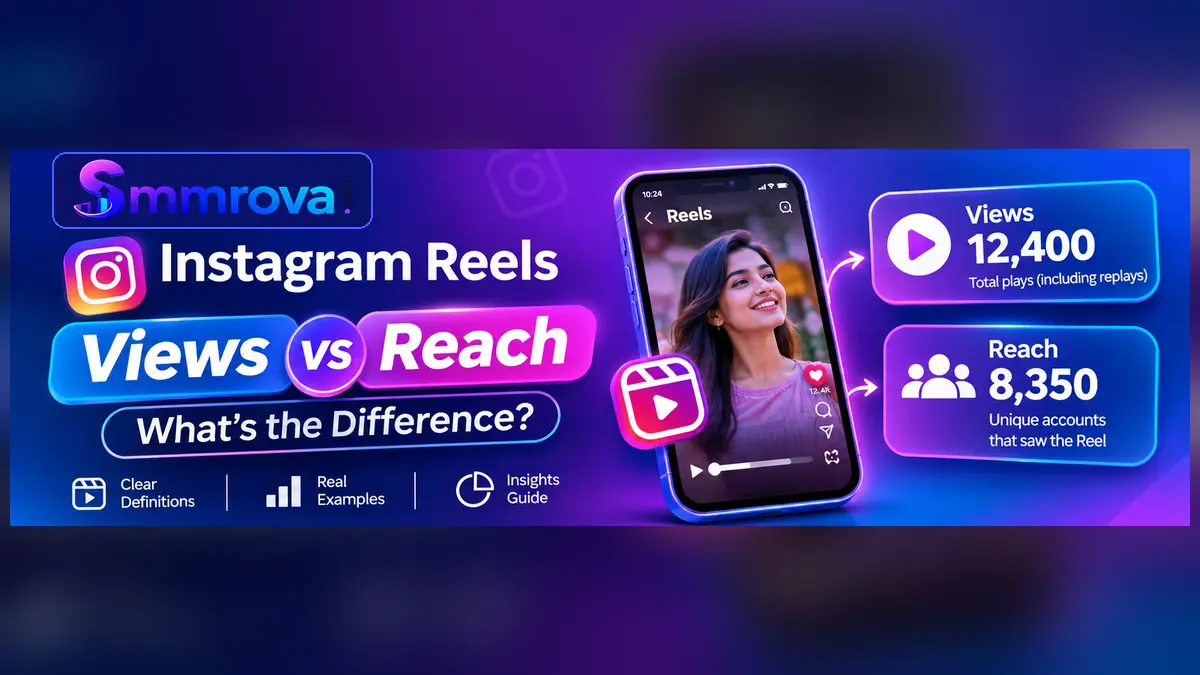
Understanding Instagram reach vs impressions is important if you want to measure how your content performs. Instagram Insights provides several numbers that may look similar, but they do not all measure the same thing. Views count how many times content is played or displayed, while reach measures how many unique accounts saw it. Impressions is the older term for total content displays and may still appear in historical reports or external analytics tools.
Instagram has updated its measurement terminology, so older tutorials may not match the labels you see today. This guide explains what each metric means, how they differ, how to interpret the numbers, and which metrics to monitor when reviewing your Instagram performance.
Instagram Reach vs Impressions: What's the Difference?
The main difference is whether Instagram is counting unique accounts or total content displays. Reach focuses on the number of different accounts that saw your content. Impressions historically counted how many times content appeared on a screen, including repeat exposure from the same account.
Views is the newer, broader content-consumption metric. It counts the number of times content was played or displayed, with repeat views included. Its calculation and availability can vary by content format and reporting source.
| Metric | What it measures | Repeat exposure | Main question it answers |
|---|---|---|---|
| Reach | Unique accounts that saw your content | Each account is counted once | How many different accounts did I reach? |
| Views | Times content was played or displayed | Repeat views can count | How many times was my content viewed? |
| Impressions | Historical total number of content displays | Repeat displays counted | How many times was my content shown? |
Important: Views and historical impressions are related concepts, but they should not automatically be treated as identical measurements. Instagram's measurement system has changed, and older reports may use different definitions.
What Does Reach Mean on Instagram?
Reach measures the number of unique accounts that have seen your content at least once. The same account does not become a new reached account every time it sees the same content again.
For example, imagine a business publishes a product post. The post appears to 1,000 different Instagram accounts. Some of those accounts return to view it again later. The reach figure can remain at 1,000 because the number of unique accounts has not increased.
Instagram may show labels such as Accounts reached or Viewers, depending on the Insights screen and the reporting interface. Meta's technical documentation also uses the term reach for unique accounts.
Why Instagram reach matters
- Audience discovery: It helps you understand how many different accounts encountered your content.
- Content distribution: It provides a useful indication of how widely a post or Reel travelled.
- Audience growth analysis: You can review whether content is reaching followers, non-followers or both, where those breakdowns are available.
- Campaign evaluation: It helps you assess the audience coverage of a promotion.
Reach does not tell you whether people watched a video completely, liked a post, visited your website or purchased a product. Those actions require other metrics.
What Are Instagram Views?
Views measure how many times Instagram content was played or displayed. Unlike a unique-account metric, Views can include repeated exposure from the same account.
For example, if one person watches a Reel several times, those plays can contribute multiple views. Similarly, a person may see a photo or other content more than once. That is why Views can be higher than the number of unique accounts reached.
Instagram introduced Views to simplify content-distribution measurement across formats. However, the exact reporting and availability can differ depending on the content type, account interface and analytics tool.
What can Instagram Views help you understand?
- How often your content was played or displayed.
- Whether people are returning to view a piece of content.
- How content consumption changes over a reporting period.
- Which posts or Reels attract more repeated viewing activity.
Views alone do not prove that viewers watched every second of a video. To understand viewing quality, review watch time and average watch time where Instagram provides them.
What Happened to Instagram Impressions?
Impressions was a widely used Instagram analytics term. It represented the total number of times content appeared on users' screens, including repeated displays from the same account.
Meta has moved toward Views as a more unified content-distribution metric. Its Instagram Platform API deprecated the older impressions metric for newer reporting from April 21, 2025. However, older reports, saved exports and some third-party analytics platforms may still display historical impressions data.
This change matters when comparing performance across different years. A report using older impressions data may not be directly comparable with a newer Views report. The definitions and aggregation methods can differ.
Should you still use the word impressions?
Yes, when discussing historical analytics, older reports or a dashboard that still uses the label. But when reviewing current Instagram Insights, check the metric's displayed name and its definition rather than assuming impressions and Views are interchangeable.
If you use a third-party analytics tool, check its documentation to understand when it changed the metric name and how it handles older data.
Instagram Views vs Reach: A Practical Example
Let's use a simple example to understand the difference between total views and unique reach.
| Example metric | Result |
|---|---|
| Unique accounts reached | 1,000 |
| Total views | 1,600 |
| Additional views beyond one per reached account | 600 |
In this illustrative example, 1,000 unique accounts saw the content, while the content generated 1,600 total views. This can happen when some accounts view the content more than once.
You can calculate a simple views-to-reach ratio:
Views-to-reach ratio = Total Views ÷ Reach
In this example:
1,600 ÷ 1,000 = 1.6
This means the content generated 1.6 views per reached account on average. It is a useful directional comparison, not proof that every account watched the content exactly 1.6 times. The figures are illustrative, not actual Instagram account data.
How to Check Reach and Views in Instagram Insights
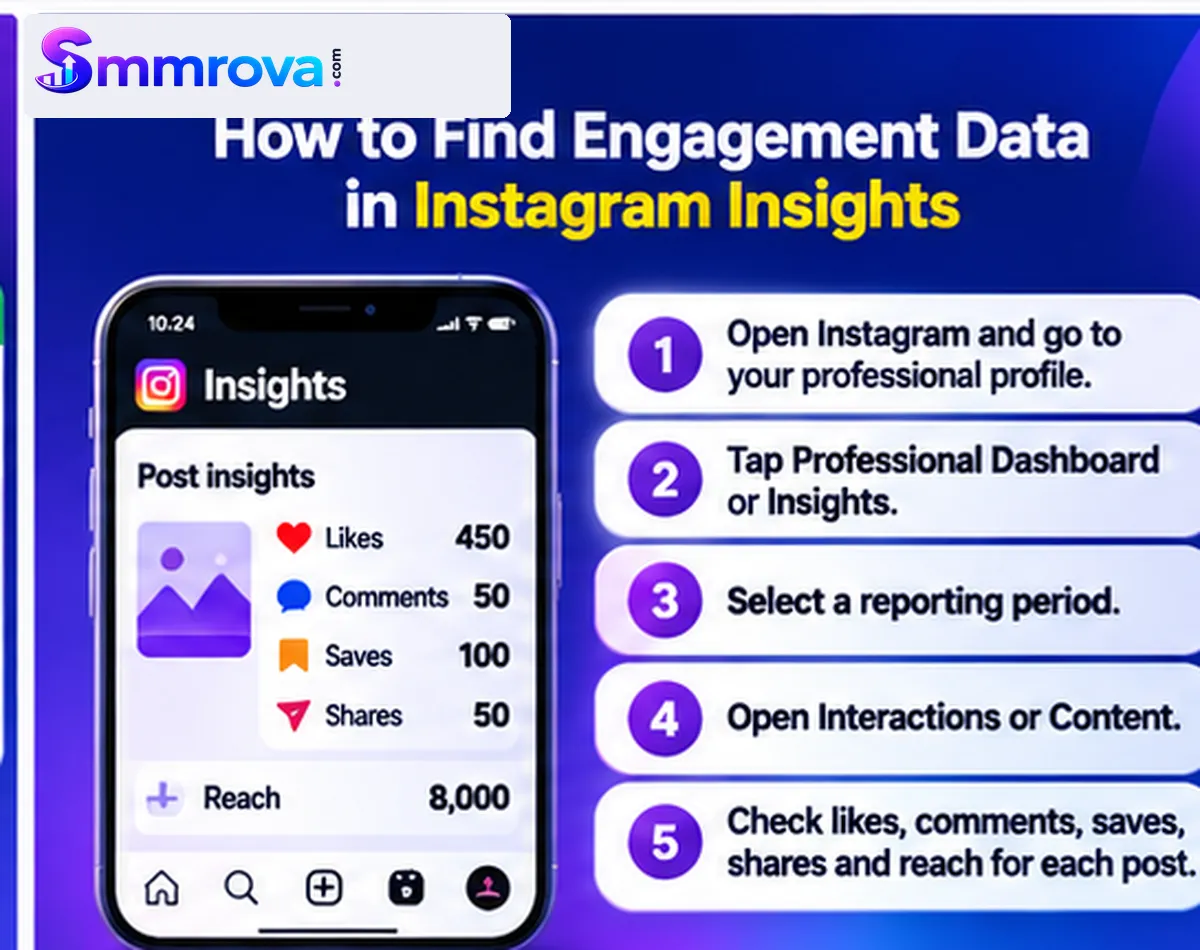
You can review content performance through Instagram Insights. The exact menu labels may vary as Instagram updates its interface, but these steps provide a practical starting point.
- Open your Instagram profile. Sign in to the account whose content you want to analyse.
- Open the dashboard or Insights. Professional accounts may show a Professional Dashboard. Other public accounts may show a different dashboard label.
- Choose a reporting period. Select the available date range that matches your reporting goal.
- Open the Views section. Review the total content views for the selected period.
- Review individual content. Open a post or Reel and select View Insights to inspect its performance.
- Look for reach or viewers. Check the unique-account metric available for that content or reporting screen.
- Compare related metrics. Review Views, reach, interactions and watch time together rather than relying on a single number.
Some Insights metrics are gradually introduced or may be estimated. If you cannot find a specific label, check the information icon beside the metric or consult Instagram's current Help Center guidance.
Which Instagram Metric Should You Track?
The best metric depends on what you want your content to achieve. Views, reach and impressions are not interchangeable performance goals.
| Your goal | Metric to review | Why it matters |
|---|---|---|
| Understand unique audience size | Reach / Viewers | Shows how many different accounts saw the content. |
| Measure total content exposure | Views | Shows how many times content was played or displayed. |
| Compare older reports | Historical Impressions | Useful when reviewing older data using the original metric. |
| Understand video consumption | Watch time and average watch time | Shows how long people spend watching video content. |
| Measure audience response | Interactions and engagement rate | Helps evaluate likes, comments, saves and shares. |
If your objective is to improve the visibility of a Reel, you can also review the Instagram Reels Views service page to understand the service details. For other eligible public Instagram video posts, see the Instagram Views service.
Remember that a higher view count does not guarantee more reach, meaningful engagement, followers or sales. Content quality, audience interest and Instagram's distribution systems remain important.
Common Mistakes When Reading Instagram Metrics
- Confusing Views with reach: Views can include repeat exposure, while reach focuses on unique accounts.
- Comparing old impressions directly with new Views: Metric definitions and reporting methods may have changed.
- Assuming every view means a complete watch: Views do not measure how long someone watched.
- Judging performance using one number: Views without reach, interactions or watch time can give an incomplete picture.
- Comparing different reporting periods: Use consistent date ranges and similar content formats when analysing trends.
- Ignoring paid distribution: Check whether the report includes promoted content before comparing organic performance.
Frequently Asked Questions
Is Instagram reach the same as impressions?
No. Reach measures unique accounts that saw your content, while impressions historically counted total displays, including repeated exposure from the same account.
Are Instagram Views and impressions the same?
They are related total-exposure concepts, but they should not automatically be treated as identical. Instagram has introduced Views as its newer content-distribution metric, and its reporting methods can differ from historical impressions.
Why are my Instagram Views higher than reach?
Views can include repeat plays or displays from the same account. Reach counts unique accounts, so repeated exposure can increase Views without increasing reach.
Does Instagram still show impressions?
Current Insights and reporting tools may use Views instead of impressions, while older reports or some external tools may retain historical impressions data. Check the specific reporting interface and metric definition.
Can I see who viewed my Instagram posts?
Instagram Insights provides aggregate performance information, such as views and unique-account counts. It does not generally provide a list of every person who viewed an ordinary post or Reel.
Which is more important: Views or reach?
Neither is universally more important. Reach helps you understand audience size, while Views helps you understand total content exposure. Choose the metric that matches your objective and review other relevant performance signals alongside it.
Final Thoughts
Understanding Instagram reach vs impressions becomes easier when you separate unique accounts from total content exposure. Reach tells you how many different accounts saw your content. Views show how many times content was played or displayed, including repeat views. Impressions is the older metric name that may still appear in historical reporting.
For accurate analysis, use the current metric labels in Instagram Insights, keep reporting periods consistent and avoid comparing historical impressions with current Views as if they were identical. Review reach, Views, interactions and watch time together to build a more complete picture of your Instagram content performance.
For more Instagram marketing guidance, read our Instagram SMM panel guide and explore the relevant resources before choosing a service.
 Up nextHow to Calculate Instagram Engagement Rate (With Examples)Instagram · 9 min read
Popular Instagram services
Ready to grow your social media?
Create a free SmmRova account and pay with bKash, Nagad or Rocket. We never ask for your password.
Create Free Account View ServicesQuestions before you order? Message us on WhatsApp